Retrieving an Abandoned Book from a Bottom Drawer

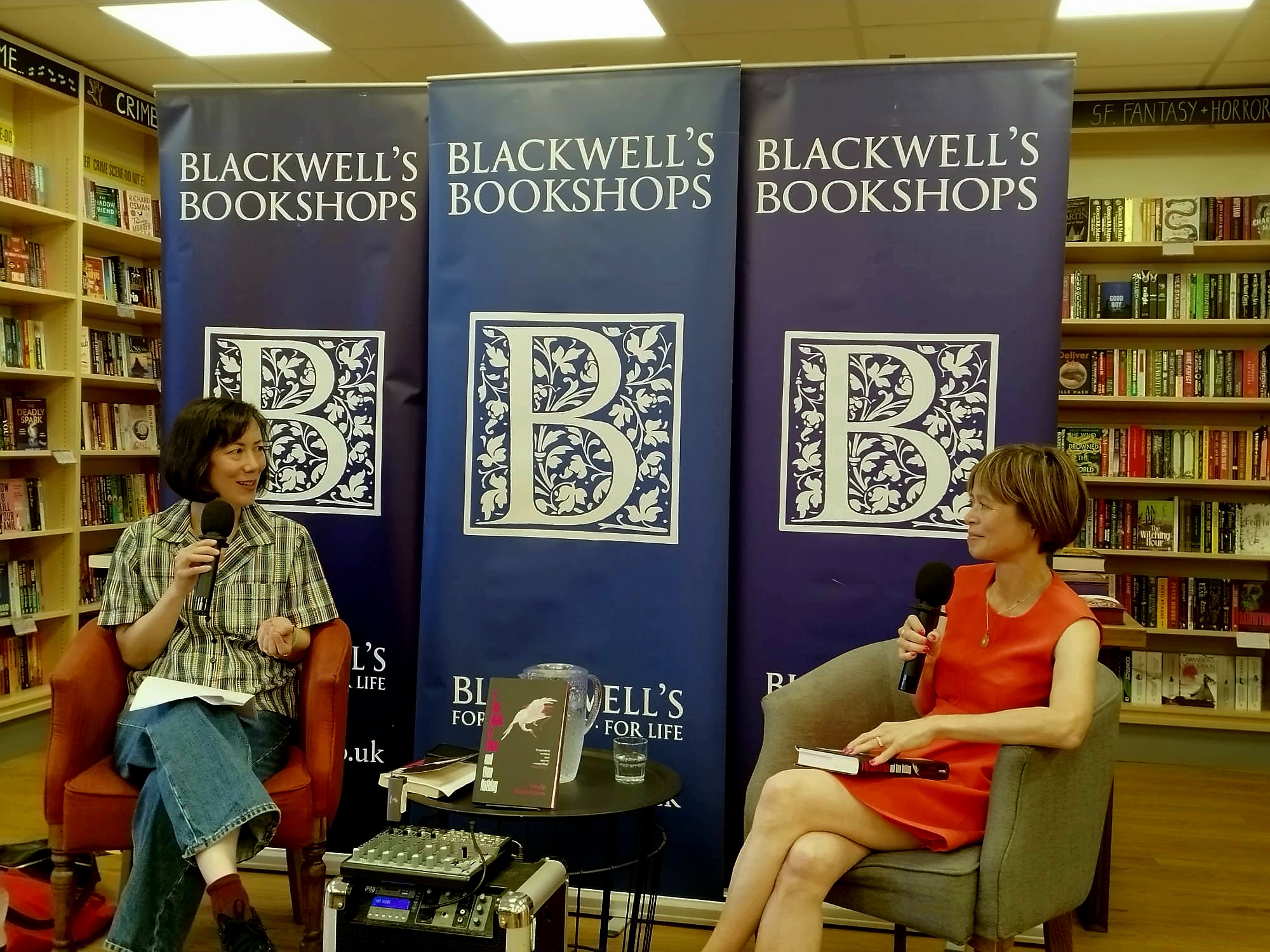
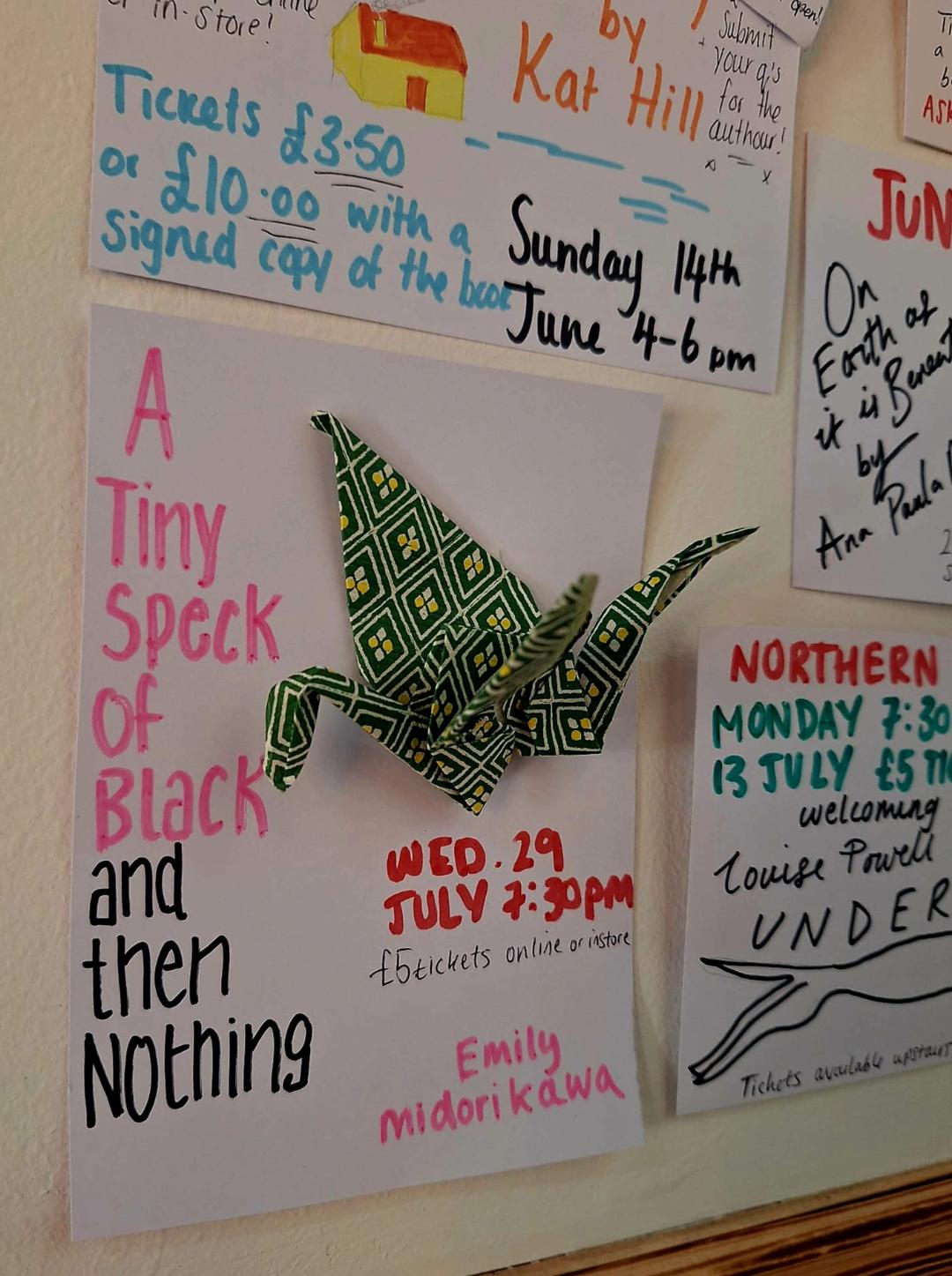
Last month, I mentioned that I’ll be marking UK publication day for my debut novel A Tiny Speck of Black and then Nothing with an event at Blackwell’s, Manchester on Thursday 23 July. I’m now delighted to be able to let you know that I’ll also be giving a talk at the fantastic independent bookshop Collected in Durham on Wednesday 29 July, so if you can’t make it to Manchester (or even if you can) I’d love to see you in Durham.

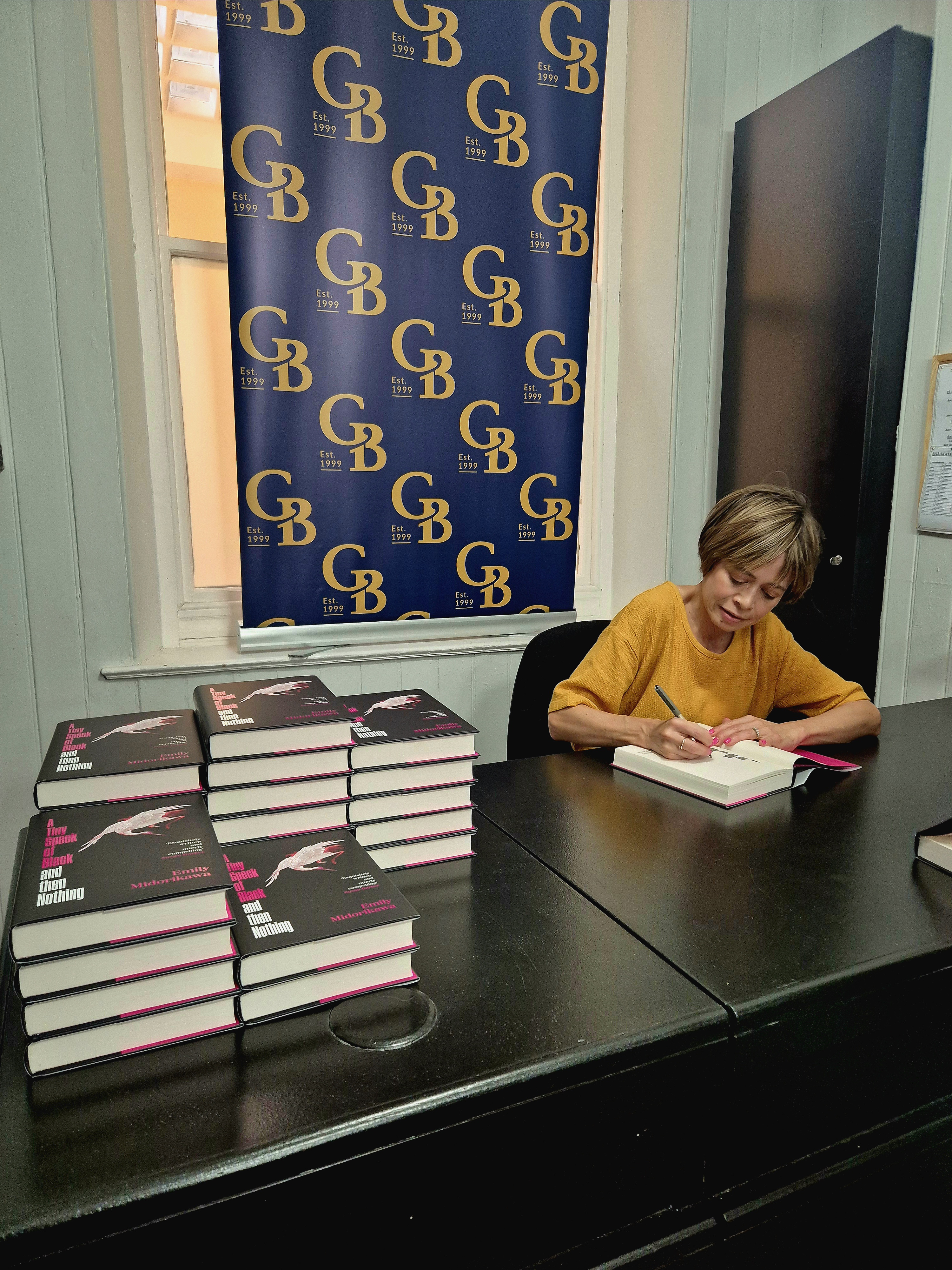
Poster for my event at Collected Books on their shop noticeboard

I’ll be adding more bookings to my events page soon and will continue to share news about them through this newsletter and on Instagram, Threads and Bluesky.

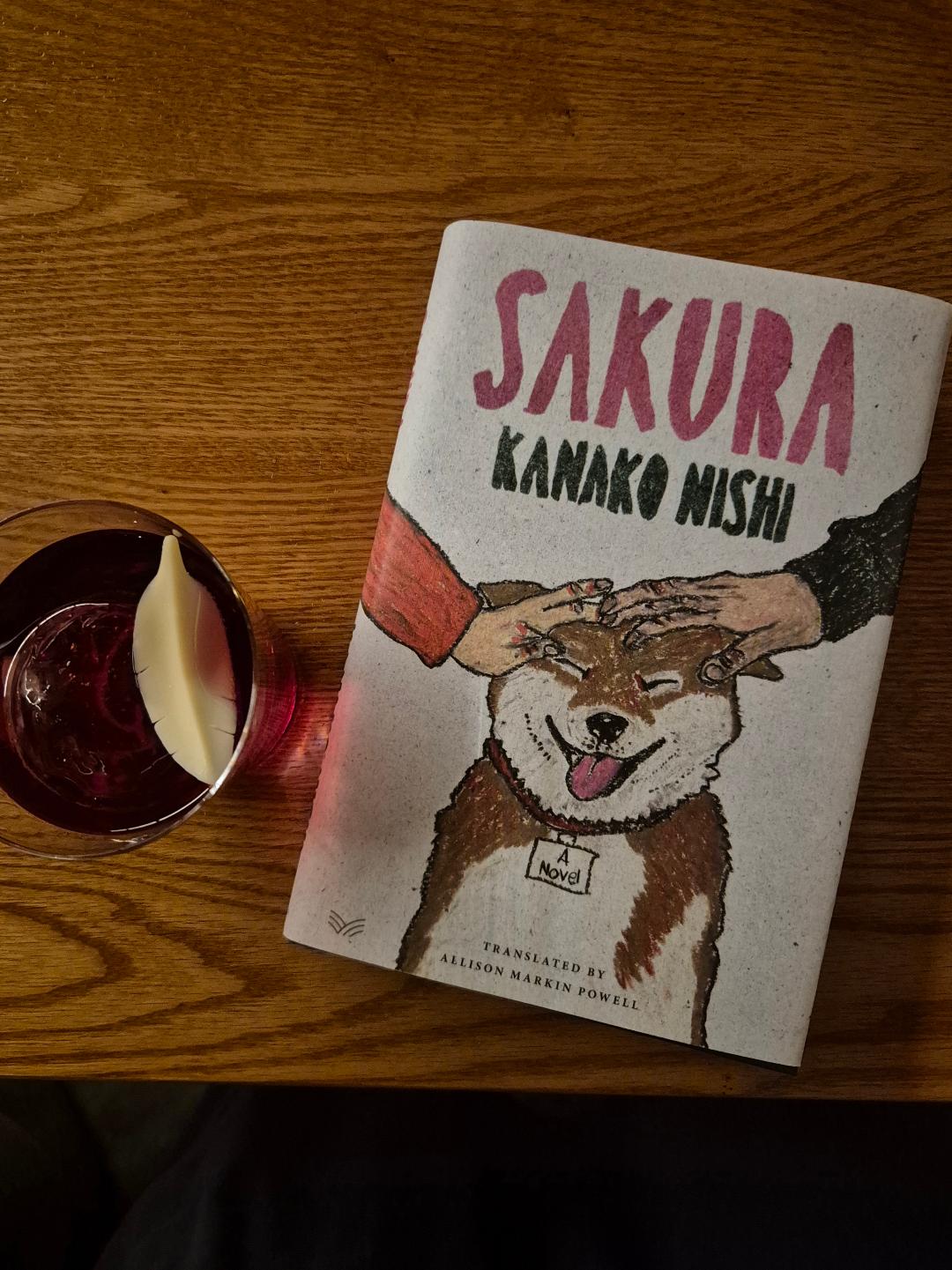
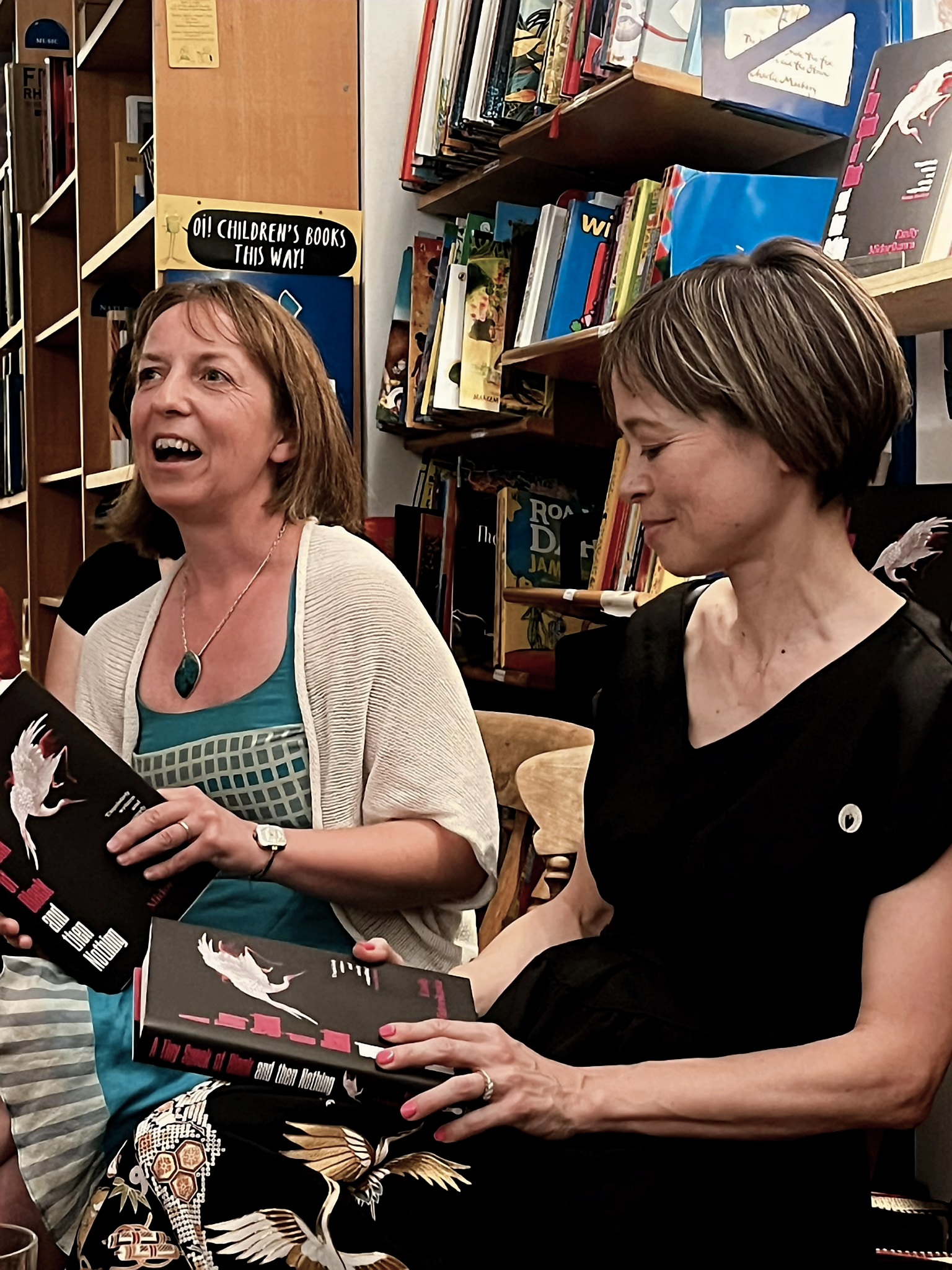
Speaking of bookshop events, here, on the other side of the Atlantic, I recently attended a fascinating talk at Lost City Books in Washington DC. Kanako Nishi, author of the novel Sakura, was appearing on a panel with her literary translator, Allison Markin Powell.

In Sakura, Nishi paints a loving picture of a close-knit Japanese working-class family that suddenly finds itself thrown into a state of shocking emotional turmoil. It was originally published in Japan in 2005, but only came out in English translation this year. Although Nishi’s publishing journey doesn’t exactly mirror mine, I couldn’t help noticing that there was a marked similarity between our two positions. As I mentioned in my April newsletter, there is a gap of over twenty years between the time when I began writing A Tiny Speck of Black and then Nothing in the early 2000s and its publication date this July.

During the bookshop Q&A, I asked Nishi what it was like to be on tour promoting a book that she wrote so many years earlier. In the engagingly relaxed speaking style evident throughout her talk, she replied that it was a bit like having someone read your personal diary from that time – which was maybe not the most reassuring answer for me, but certainly made us all laugh!

Relaxing with my copy of Sakura by Kanako Nishi (translated by Allison Markin Powell)

In the weeks since that book event, I’ve found myself thinking a lot about Nishi’s words. Although I can’t yet summarise the experience of discussing my novel in public, I can say something about how strange it has sometimes felt to be working in private on a long abandoned manuscript that I began when I was young.

When, to my utter astonishment, an editor who’d read A Tiny Speck of Black and then Nothing some years ago suddenly got back in touch with my literary agent and offered to take it on, I realised that I’d better quickly reread the book to see exactly what was there.

Given that I hadn’t looked at its pages in almost a decade, it was with some trepidation that I opened up the document on my computer.

I worried that the story wouldn’t hold together; that sentences originally penned when I was a less experienced writer might amount to something that was, well … just, quite bad; and that the book’s once contemporary, early 2000s setting might come across as dated.

Once I began reading, however, I felt pleasantly surprised. Despite seeing at once that plenty of work was needed – and the manuscript would, indeed, undergo at least five more significant redrafts – I was relieved to find that the essence of the story could remain as it was. As for the writing, I’d be lying if I denied that there were lines that made me cringe, instances of clunky phrases, metaphors that seemed muddled. But thankfully, my prior experience of publishing two other (nonfiction) books had taught me that problems such as these were fixable.

What then of the question of how much the novel had dated?

Beginning to read it again in early 2024, with a publishing deal on the table at last, I found that, yes, in some ways, the two-decade gap in time seemed vast. It was immediately apparent in everything from the colloquial language of the book’s characters, to the technology they used, to the extent to which their day-to-day lives were lived largely offline.

But as I made my way through the manuscript I realised that, in setting my novel in the early aughts I had inadvertently captured something of an era that was on the cusp of huge social change. As my characters moved through the book’s Osaka cityscape –  taking blurry images on their first camera phones, listening to music on CDs, making decisions about where to go out at night based on enticements promised by paper flyers – they had no idea how soon the prevalence of social media, smartphones and the internet in their pockets would completely alter the way they lived.

Rather than trying to work around these things, to try to make A Tiny Speck of Black and then Nothing seem more up-to-date, I decided that what I should do instead was to lean into these aspects of my novel. And as it would turn out, revisiting this recent-yet-distant past would become one of the most enjoyable aspects of redrafting. While perhaps not exactly like reopening the pages of an old diary, the process brought back enough memories of the early 2000s that, sitting at my desk in the months leading up to publication, it would often feel to me – and thrillingly so – as if I were living in two eras at once.

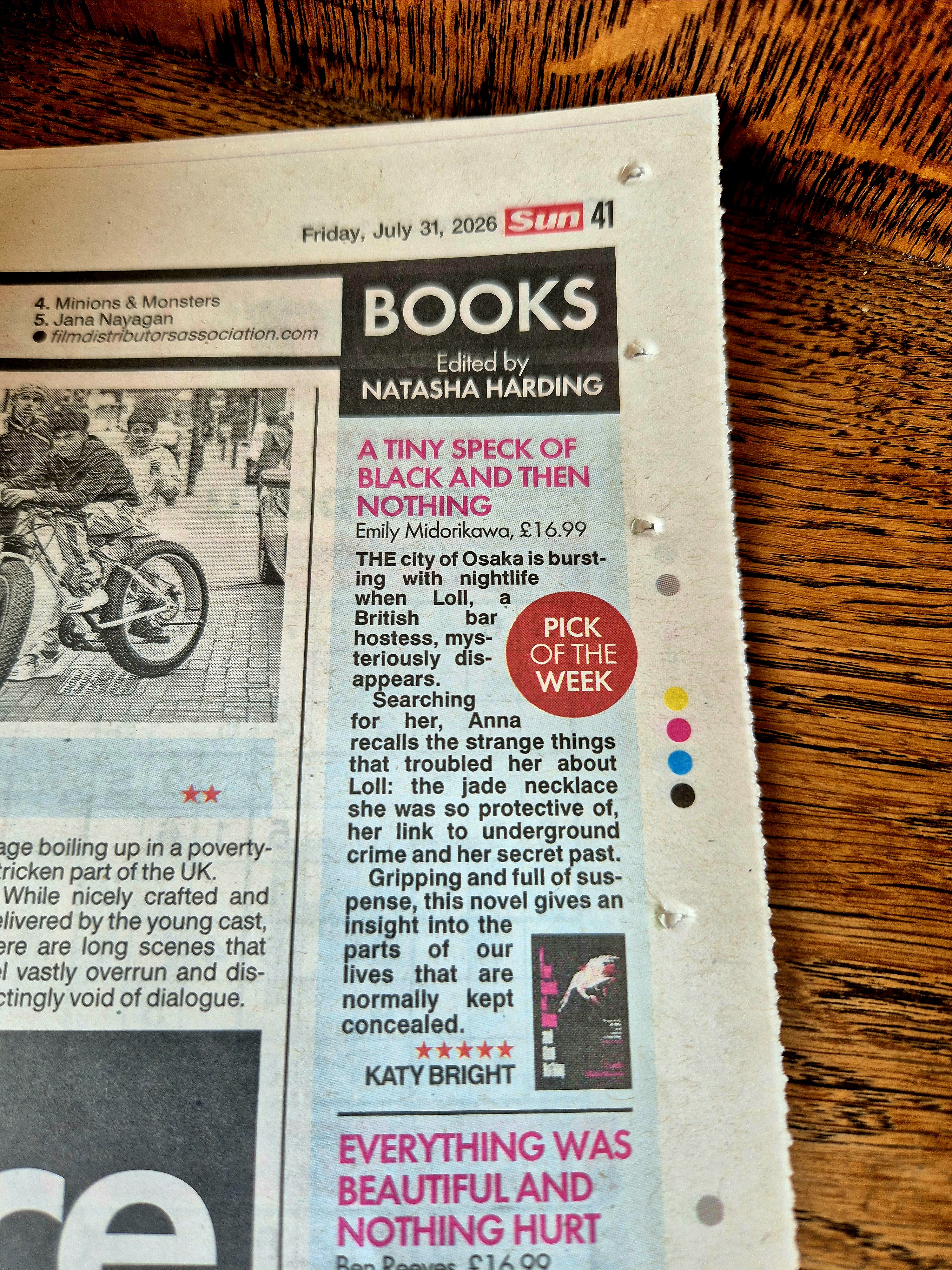
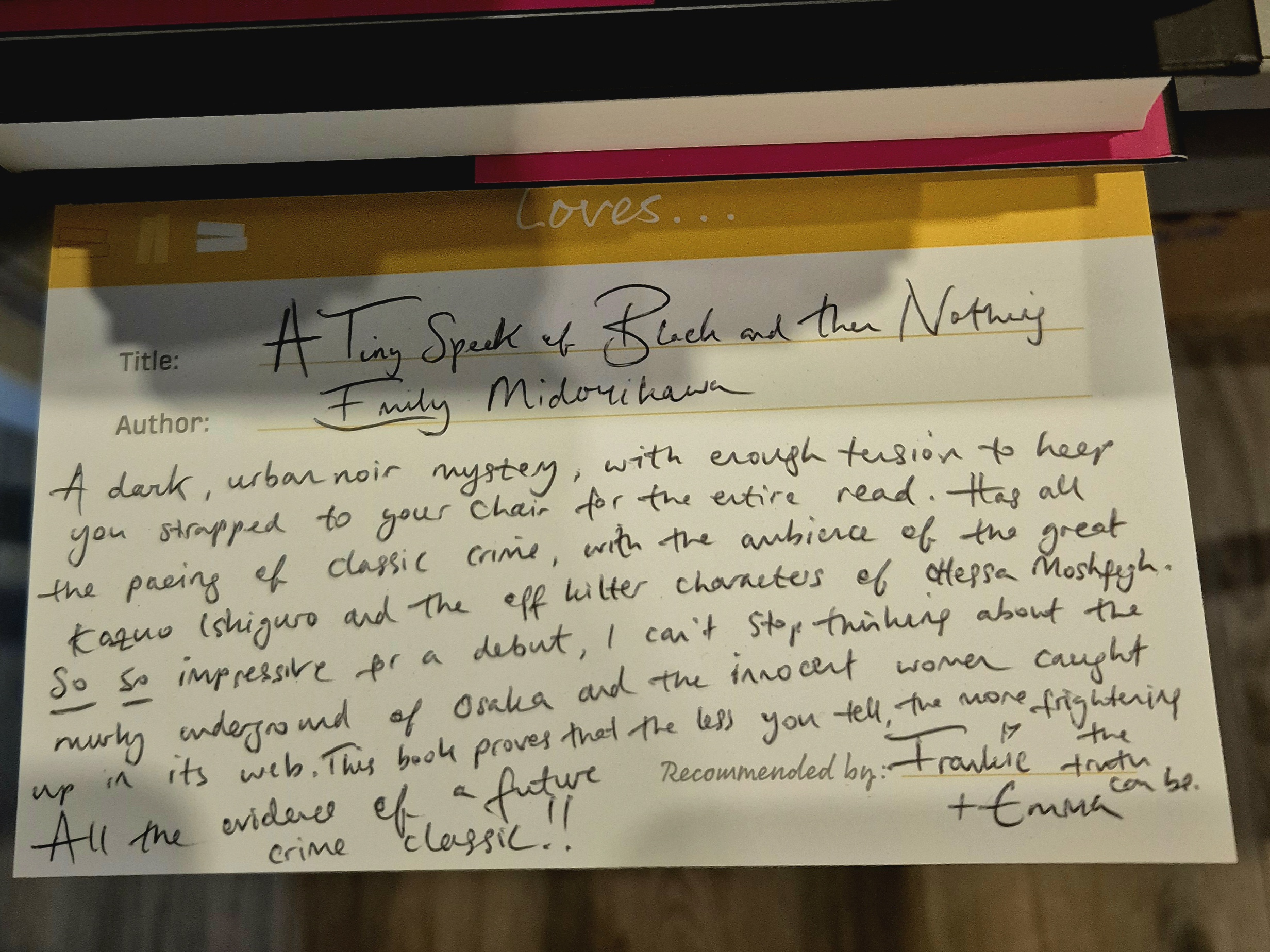
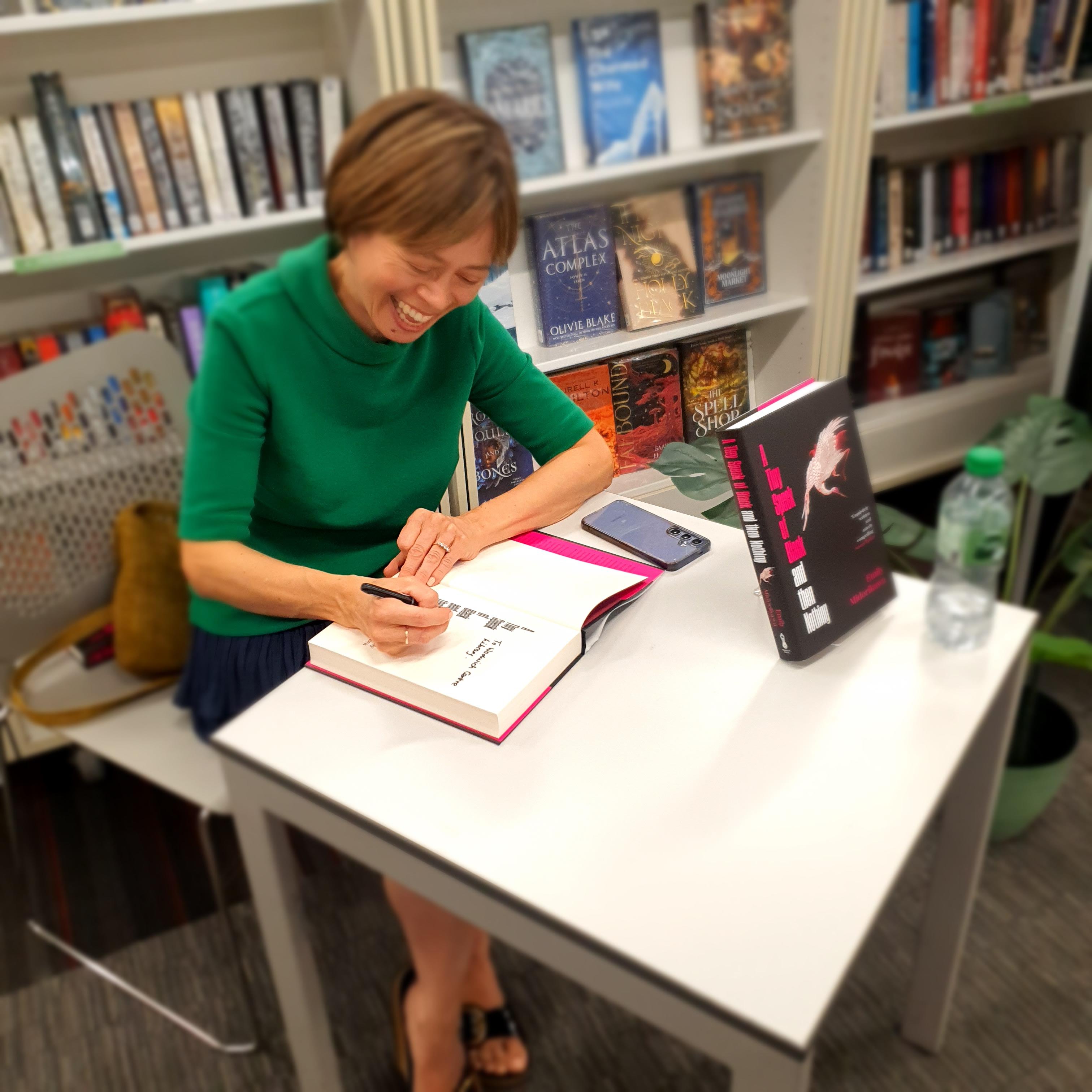
A Tiny Speck of Black and then Nothing will be published by Manilla Press on 23 July 2026 and is available for pre-ordering now.

Tickets for my Blackwells, Manchester event (where I’ll be in conversation with the author of Old Soul, Susan Barker) are available here.

Tickets for my Collected event in Durham are available here.

If you would like to make sure you receive my next monthly essay, and others like it, you can sign up for my newsletter here.
The Long and Winding Road to Publication

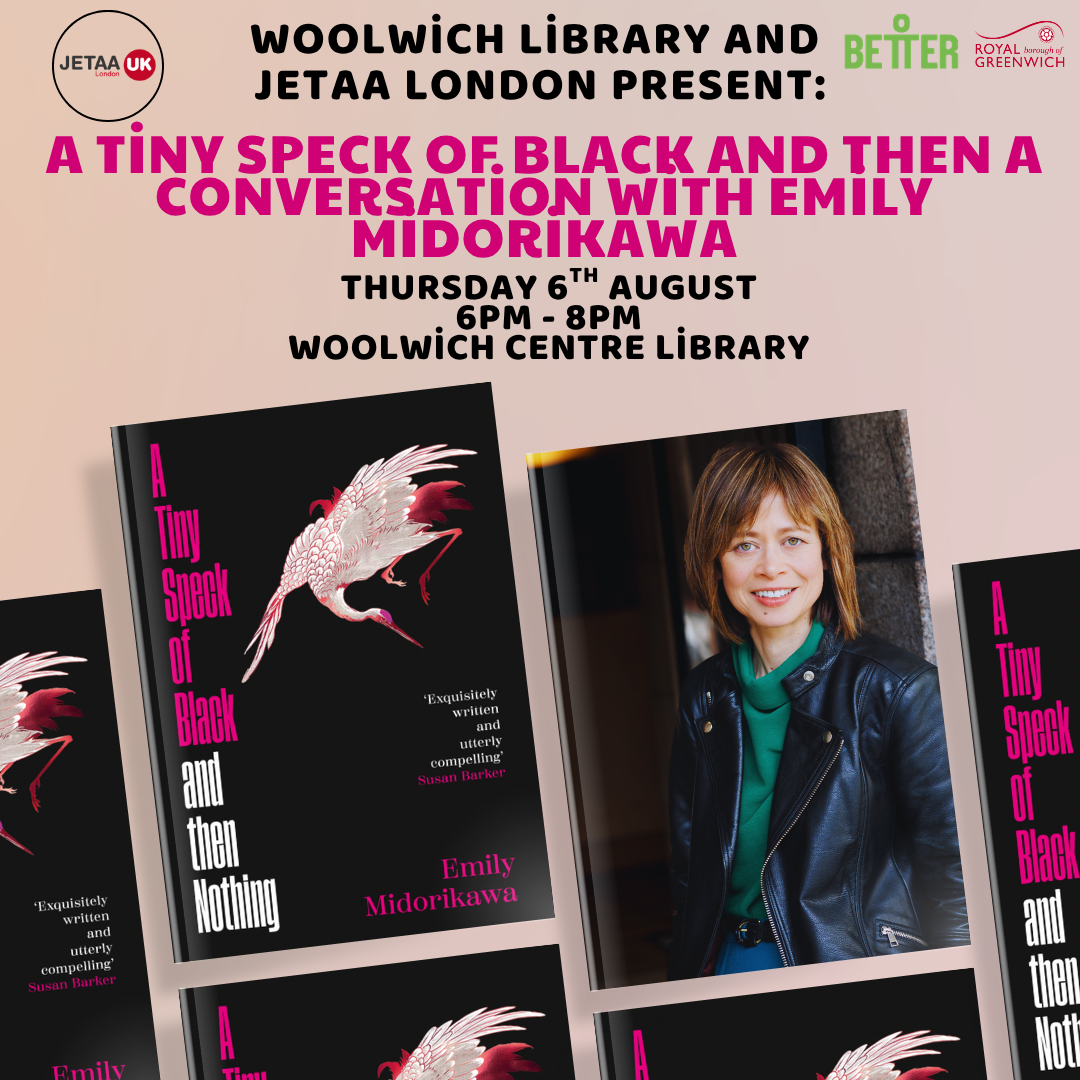
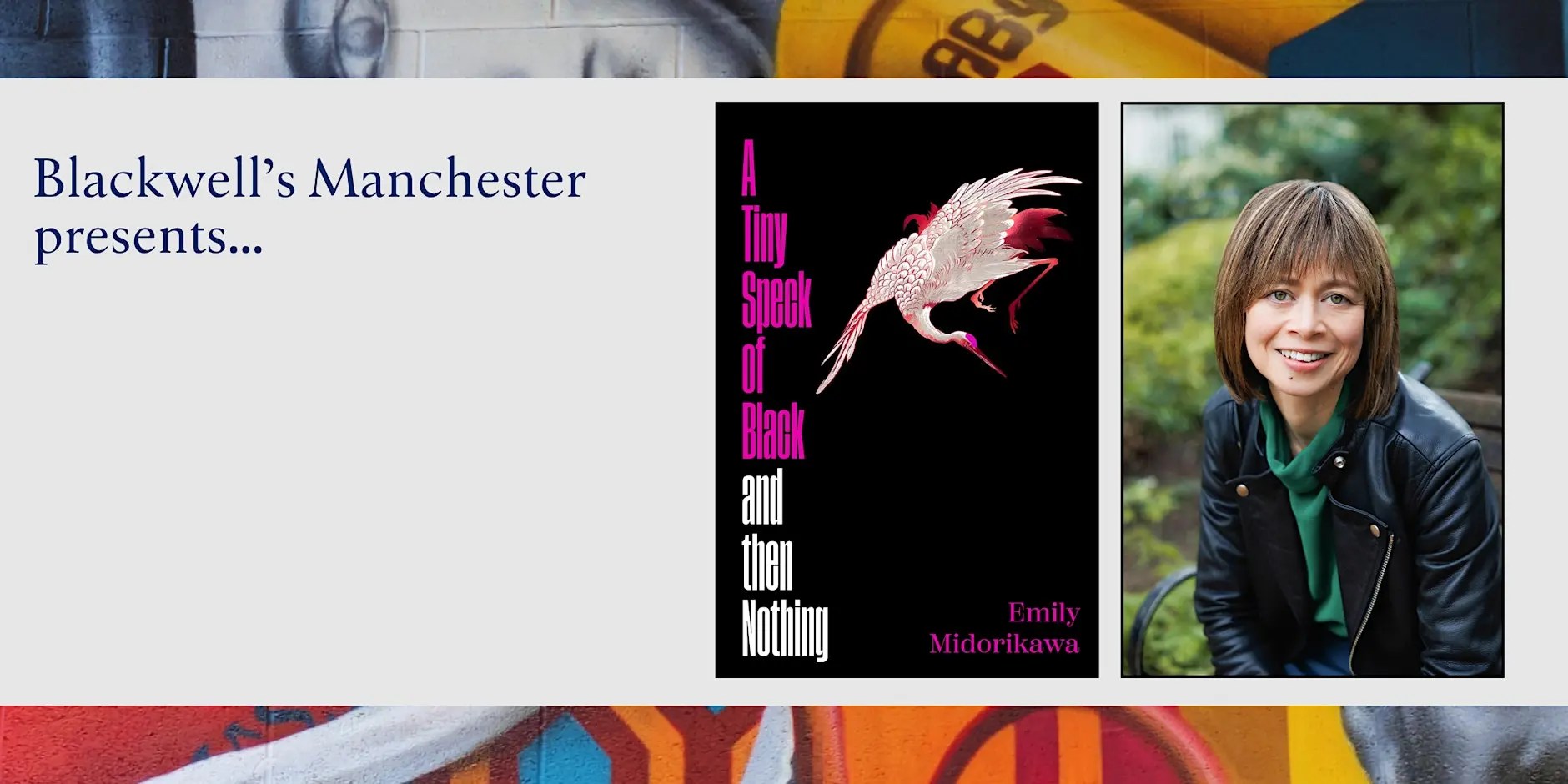
There are just under three months to go until A Tiny Speck of Black and then Nothing, the novel I began over twenty years ago, will be published in the UK. I’ll be back in Britain for much of the summer and will be marking publication day with an event at Blackwell’s, Manchester on Thursday 23 July. I will be in conversation with Susan Barker, author of the highly acclaimed literary horror novel Old Soul among other brilliant books.

I still sometimes struggle to comprehend that I am in this position at all – preparing to speak at public events about a novel I’d once thought would never see the light of day. Tickets are available here. If you can make it to Manchester, I would love to see you at Blackwell’s!

As I wrote last month, I began writing A Tiny Speck of Black and then Nothing when I was in my early twenties and working as an English language teacher in Japan. After returning to the UK, aged 23, I initially moved back to the town where I grew up, took a part-time secretarial job that left me ample time to keep working on my novel, and began applying to university creative writing programmes.

Following an acceptance to UEA’s famous MA course, I packed the bag containing my laptop and the loose printed pages of my novel-in-progress with a great deal of nervous excitement. But my time at UEA, though wonderful in many ways, would turn out to be more emotionally difficult than I’d anticipated.

Halfway through the year, my father died. Losing him when I was still only in my mid-twenties, had a profound effect on me. Afterwards I never felt young in the same way again, and, looking back, I can see how the grief I felt transformed the way I wrote about loss in my book.

By the time I left UEA, I had a scrappy first draft. An extract published in that year’s course anthology attracted the interest of a couple of literary agents, but it didn’t lead to any formal offers of representation, much less to a publishing deal.

Still, I kept going, (mostly) firm in my belief that – although aspects of my novel still needed lots of work – I had a story worth telling. Eventually, a different agent took me on and, after revising the manuscript extensively with her, I steeled myself as it went out on mass submission to publishers. Some editors showed an interest in the book’s urban Japanese setting; my depictions of hostess bars; and the central storyline of an intense friendship between two young women, one of whom suddenly disappears. But, although I seemed to get close on a few occasions, it didn’t lead to a publishing contract.

By this stage, I had been living with A Tiny Speck of Black and then Nothing for a long time – around eight years in fact. Having already committed so much time and energy to the novel, it was very difficult to put it aside. Dejectedly, I did, though, to concentrate on other writing projects, including various collaborations with Emma Claire Sweeney, whose friendship – as I described in my March post – has been of the utmost importance to me.

In 2012, my mother died. I was 32, still relatively young to have lost both my parents. Again, as in the case of my dad’s passing, the long shadow cast by Mum’s death would go on to affect the ways in which I approached the theme of loss in my novel when I unexpectedly found myself returning to work on it some years into the future.

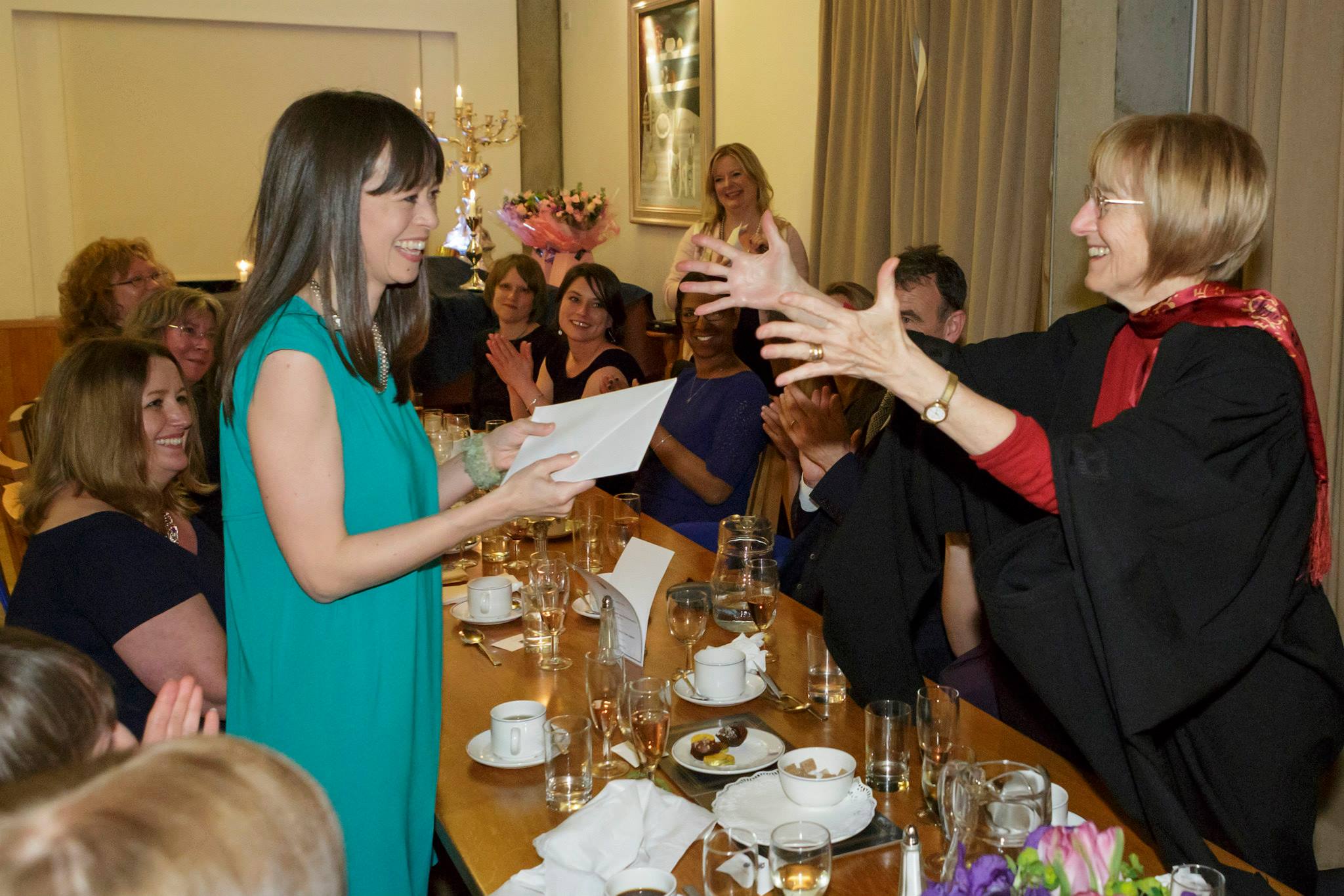
During the decade and more when A Tiny Speck of Black and then Nothing largely languished in a metaphorical bottom drawer, I occasionally dusted off the draft to enter it into competitions for unpublished writers. My novel had some success with the SI Leeds Literary Prize and Yeovil Literary Prize. Then in 2015, it made the shortlist for the influential Lucy Cavendish Fiction Prize. At that year’s prize ceremony, to which I took Emma as my guest, I was stunned to hear my name announced as the winner.

Being announced as the 2015 winner of the Lucy Cavendish Fiction Prize by Professor Janet Todd OBE
(Image courtesy of Lucy Cavendish College)

It is hard to overstate the impact of these small victories on my confidence at a time when my belief that A Tiny Speck of Black and then Nothing would ever be published was at an all-time low. These wins opened doors, offered unexpected opportunities and led to lasting friendships with fellow shortlistees and other people associated with the awards.

Such prizes also helped me to be taken more seriously when I was pitching proposals for my two nonfiction books, A Secret Sisterhood (cowritten with Emma Claire Sweeney) and Out of the Shadows, published in 2017 and 2021 respectively. Both were historical group biographies. I relished the research and writing of these works, but after Out of the Shadows came out I decided that I wanted to give fiction another go.

As the mother of two small children by then, my progress was slow and steady. But I had begun a new novel when, completely out of the blue, in early 2024, I received word from my agent that that an editor who’d read the manuscript of A Tiny Speck of Black and then Nothing some time ago was asking if it was still available.

In the years since she had begun representing me as a writer, my agent (whose commitment to this novel has been extraordinary) had continued to show my manuscript to editors from time to time. As before, some had shown an interest but nothing had ever worked out. So, although I was happy for this editor to take another look at the work, I didn’t hold out much hope.

You can imagine my amazement then when, two decades after I first began writing my novel, I found myself signing a publishing contract at last – and being faced with the somewhat daunting prospect of returning, in mid-life, to a book I originally conceived as a young woman.

The process of revising the manuscript for publication has been surprising, challenging and illuminating – and more than a little uncanny at times. There has also been pleasure in meeting the writer I once was on the page, and in the realisation that the passage of time has, in fact, enriched the story I am able to tell.

In May, I will explore what it’s like to come back to a creative work after a long break.  If you would like to make sure you receive this next monthly post, and others like it, you can sign up for my newsletter here.
A Tiny Speck of Black and then Nothing will be published by Manilla Press on 23 July 2026 and is available for pre-ordering now.

Tickets for my Blackwells, Manchester event with Susan Barker are available here.

Out of the Shadows – Out today! Plus an online launch and pieces in the Wall Street Journal, New York Times and Boston Globe

I’m delighted to be able to say that my book, Out of the Shadows: Six Visionary Victorian Women in Search of a Public Voice is published by Counterpoint Press today in North America.

It was recently reviewed in the Wall Street Journal by Brandy Schillace, who praised its ‘tapestry of complex characters with conflicted motivations, woven together with the color of ghostly apparitions (and angry mobs)’. Last week, an interview of me talking to Books Editor Kate Tuttle about my research into unlikely Victorian superstars, the Fox sisters, Emma Hardinge Britten, Victoria Woodhull and Georgina Weldon, also featured in the Boston Globe. And today the book was reviewed by Christine Leigh Heyrman in the New York Times

If you’re based in the USA and would like to buy a copy, Out of the Shadows is available from, among others, Bookshop, Barnes & Noble, Amazon, or your favourite indie bookstore. Or you could request a copy at your local library.

If you live in Canada, it’s available at bookshops including Amazon, Indigo, or your favourite indie. Or, again, you could request a copy at your library.

The (slightly delayed) UK release date is 20 May, but it’s available for preorder from shops including Waterstones, Blackwell’s, Foyles and Amazon at present, with preorders soon to be available more widely in the UK too.

Out of the Shadows is also available as an e-book or audio-book, via your favourite reading or listening app.

Finally: although the current Covid-19 restrictions have stopped me from having an in-person launch here in London, I’m so happy to be able to celebrate the release of my book in an online event to which anyone interested – anywhere in the world – is invited. I’ll be in conversation with my wonderful editor, Jennifer Alton, in an event hosted by the independent bookshop Brookline Booksmith. It’s on Sunday 16 May, and the local time of the event, in the US, is 4pm EDT. For anyone like me who will be joining from the UK, that’s 9pm BST. Tickets are free, but you need to register, which you can do here. Wherever you are, I hope you can make it!

Coming Soon! – A Secret Sisterhood: The Hidden Friendships of Austen, Brontё, Eliot and Woolf

It’s been ages since I posted anything here and so I thought I really ought to remedy this.

Emma Claire Sweeney and I have spent the greatest part of the past few months, working away on our co-authored book. Most frequently, we’ve been hunched over our desks in our own studies or at Senate House Library, but we also spent an enjoyable – if chilly – week in January on a Bread Matters Cultural Foundation residency near Lisbon.

This was, in fact, the same place that we’d taken ourselves off to when we were first planning our, then unnamed, website about female literary friendship, which we’ve been running for the past three years. So it seemed especially fitting to return here in early 2017, when we were in the final stages of editing our book on the literary friendships of Jane Austen, Charlotte Brontё, George Eliot and Virginia Woolf.

Proofs for A Secret Sisterhood. Looking forward to seeing the real copies…

At last, the UK edition of A Secret Sisterhood has gone off to the printers and the US version will not be far behind. The UK edition is available for pre-order here, the US one here.

Unlike the posts we write on Something Rhymed, necessarily limited to a few hundred words, each section of A Secret Sisterhood delves in far greater detail into one of the book’s four main literary friendships. We’re both looking forward to hearing what readers think of the stories we’ll be sharing of Jane Austen and the amateur playwright Anne Sharp; Charlotte Brontё and the feminist author Mary Taylor; literary legends George Eliot and Harriet Beecher Stowe; and the combative, yet affectionate, friendship of Katherine Mansfield and Virginia Woolf.

Another thing I’m eagerly anticipating is the prospect of doing more events with Emma. The last talk we gave at City, University of London – with Something Rhymed guest bloggers Susan Barker, Ann Morgan and Denise Saul – feels a very long time ago now, and so Emma and I are glad to be in the process of organising many more literary friendship-themed sessions. One of these will be the 46th annual lecture for the George Eliot Fellowship, at which we’ll be the keynote speakers. We’ll be focusing on Eliot’s transatlantic literary friendship with Stowe – surprisingly little known today despite its historical importance.

The lecture takes place at 2.30 pm on Saturday 16 September. Tickets can be purchased here.

Something Rhymed literary salons

Thanks to a generous grant from Arts Council England, Emma Claire Sweeney and I have been able to organise a series of literary salons at NYU London.  These events will bring together writers and literary professionals, to discuss the problem of gender equality in the literary world and come up with positive solutions.

Something Rhymed Salon flyer

For more details about the salons, please click here. We look forward to seeing you there.

Something Rhymed Salon flyer p2

‘A Secret Sisterhood’ talk at NYU London

 Pens 2 new


Emma Claire Sweeney and I will be giving a talk at NYU London tomorrow (3rd December).

‘A Secret Sisterhood’ will focus on our research into female literary friendship, in particular the friendships of George Eliot and Harriet Beecher Stowe, and Katherine Mansfield and Virginia Woolf.

We’ll let our Something Rhymed readers know how it went in an upcoming blog post, and you can find out more about these relationships, and many others, by visiting Something Rhymed.

‘Working With Writing: the art of collaboration’ at City University

There are still a few places left for Working With Writing: the art of collaboration at City University London this Thursday.

The event, chaired by Rebekah Lattin-Rawstrone, will feature author Heidi James and her editor Hetha Duffy of Bluemoose Books, as well as Emma Claire Sweeney and me.

Emma Claire and I will be talking about our jointly-run website Something Rhymed, and our research into historical literary collaborations between some of the world’s most famous female writers.

If you can make it, we’d love to see you there:

Citylogo

Thursday 23 April 2015 at 6.30pm
Performance Space, College Building, St John Street, London, EC1V 4PB
£10, including a glass of wine or soft drink.


Article for Hippo Reads and event at the Ilkley Literature Festival

Last night, Emma Claire Sweeney and I met up at the Southbank Centre for the pre-award celebration for this year’s SI Leeds Literary Prize. As a former runner-up, I really wanted to go along to support the 2014 shortlistees – not least because of the help Emma Claire and I have received from three of them.

Season Butler, Reshma Ruia and Kit de Waal were all kind enough to answer some interview questions about their friendships, as was prize advocate Irenosen Okojie. We’ll be featuring a new creative piece inspired by their answers during our talk at the Ilkley Literature Festival next week. This is a free event and we’d love to see you there.


SOMETHING RHYMED

~ the literary friendships of famous female authors

Ilkley Playhouse Wildman

Wednesday 15th October

9.15-10.15 pm


For a taster of the sort of thing we’ll be discussing, you can also read our article for Hippo Reads, which went live on their website yesterday.

Workshop at the National Portrait Gallery

I was in Liverpool on Wednesday evening for the Writing on the Wall festival’s ‘Top Girl’ event, in conversation with Helen Walsh and the Women’s Organisation.

My next event is part of a collaboration between City University London and the National Portrait Gallery. ‘The Blank Page’ writers’ workshop, in association with Anxiety Arts festival, takes place at the National Portrait Gallery on Thursday 12 June.

The practical session will use visual prompts to explore ways of creating believable characters on paper. It’ll be suitable for participants of all abilities and levels of experience, and I hope to see you there.

Time: 18:30-20:30

Tickets: £10 (£8 concessions and Gallery Supporters)

For more information and to book your place, please click here.