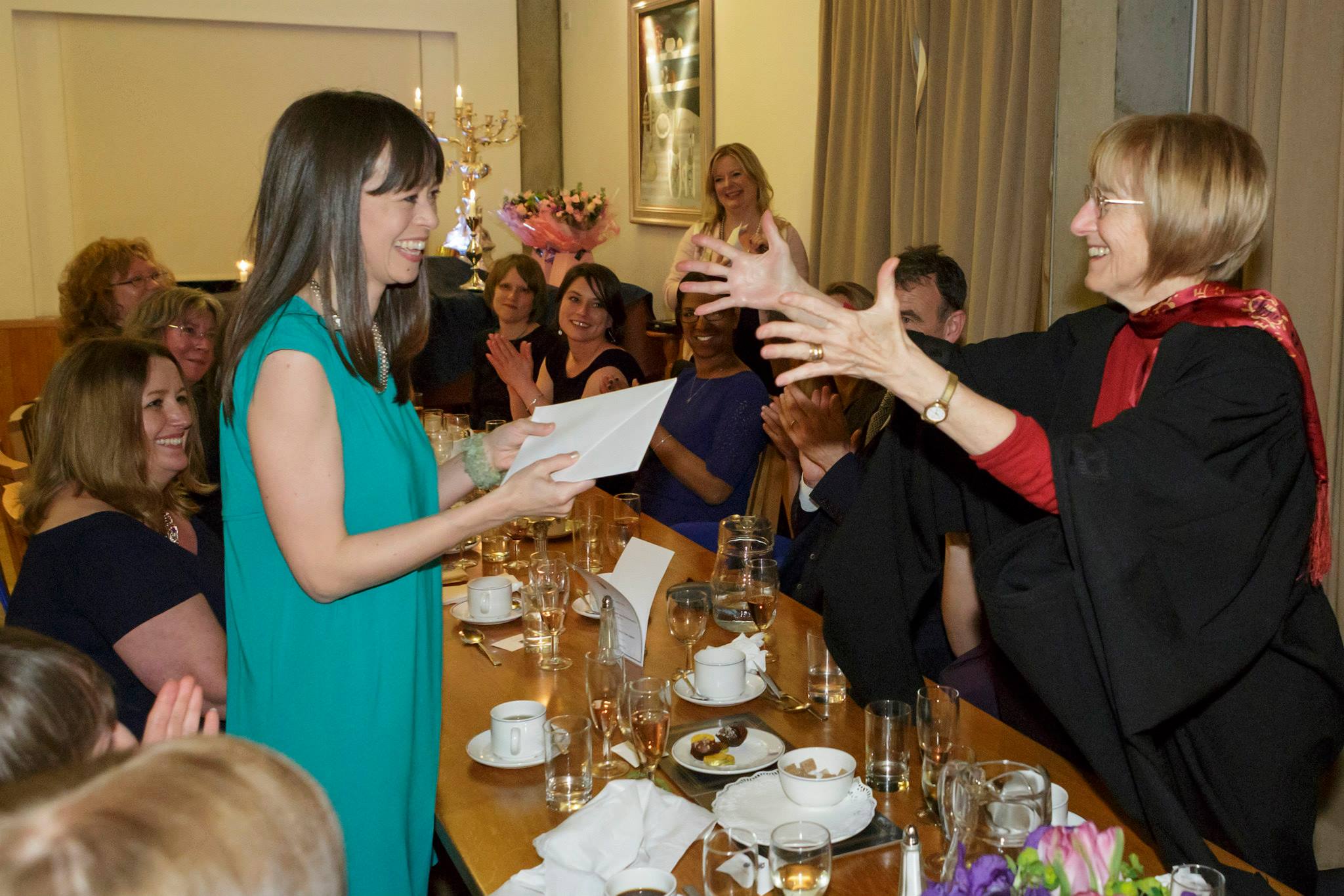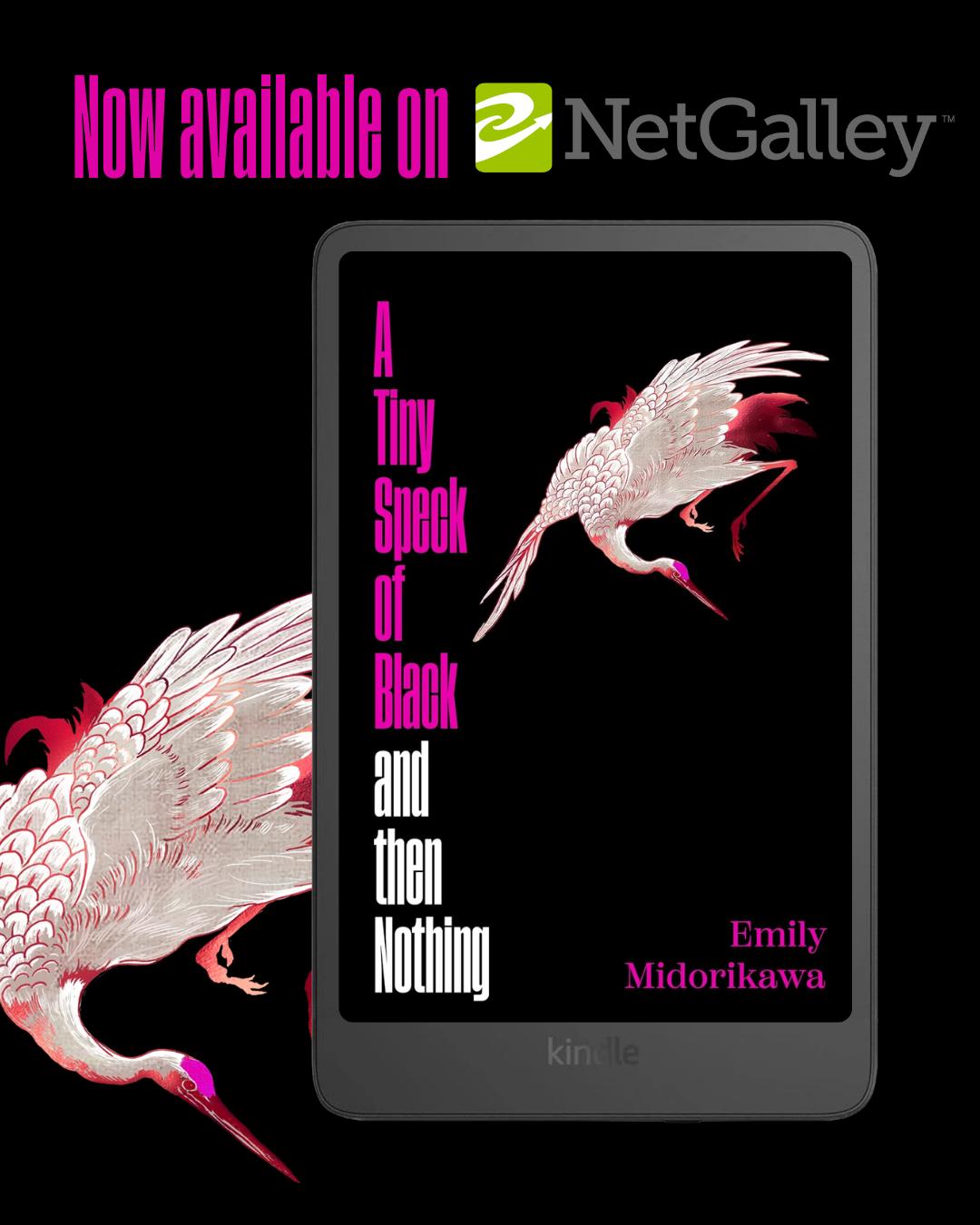
For me at least, it’s hard to believe that A Tiny Speck of Black and then Nothing – the novel I began while I was living in Japan in the early 2000s – will be released by Manilla Press in a month’s time. You can preorder it now (as a hardback, ebook or audiobook), and even take an early peek by requesting a proof on NetGalley.
For North American readers, the ebook of the novel will be published by Open Road Integrated Media on 4 August and is also available for preordering now. Paperback and audiobook versions will follow.
If you’d like to hear me talking in person about A Tiny Speck of Black and then Nothing, it would be great to see you at one of my UK book tour events this summer. A date recently added is the Bàrd Debuts night at Bàrd Books in London on Wednesday 22 July, where I’ll be appearing with a group of exciting new authors. I’ll also be at Blackwell’s, Manchester on Thursday 23 July and Collected in Durham on Wednesday 29 July. I will be adding more dates to my Events page soon.
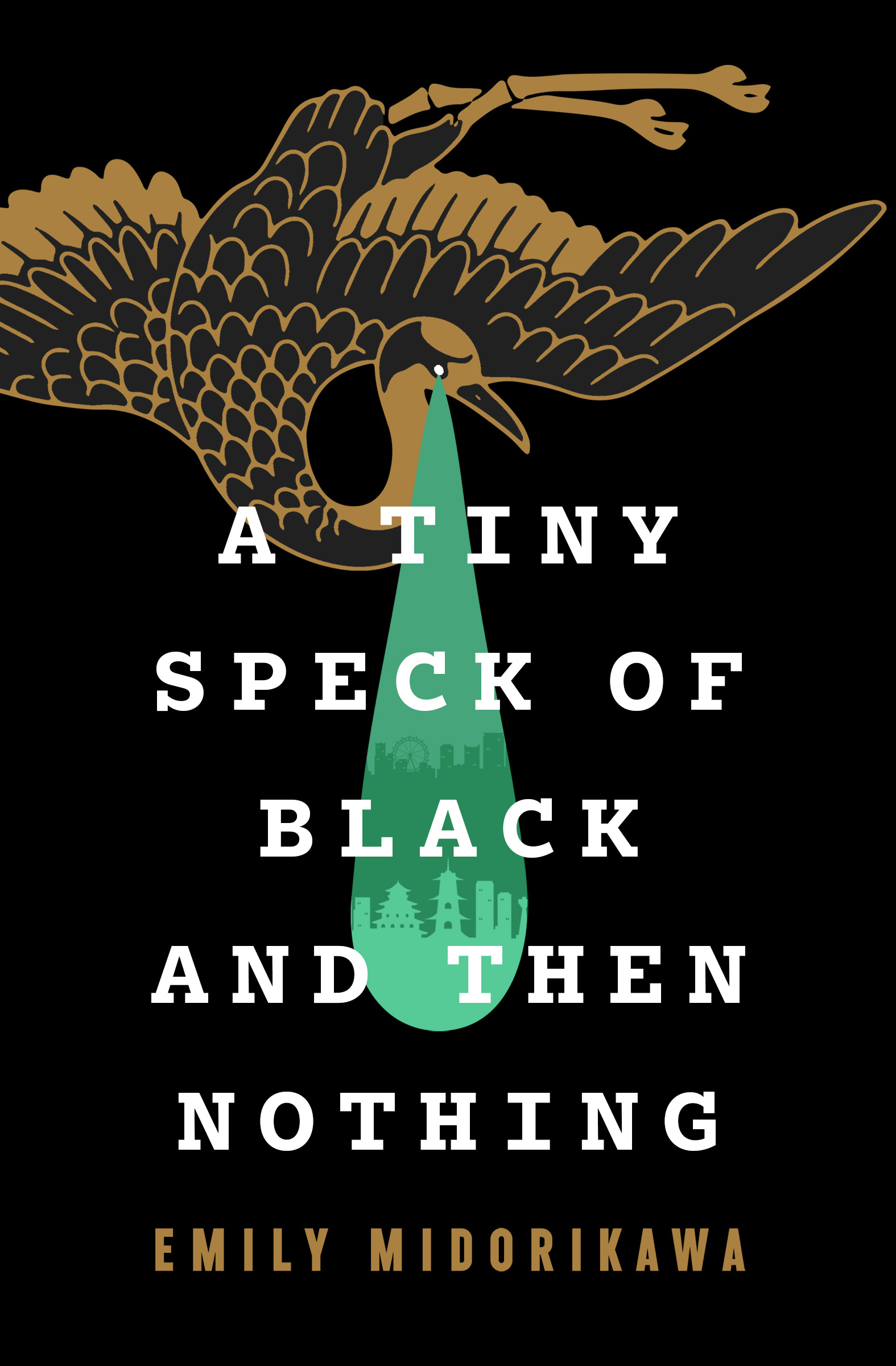
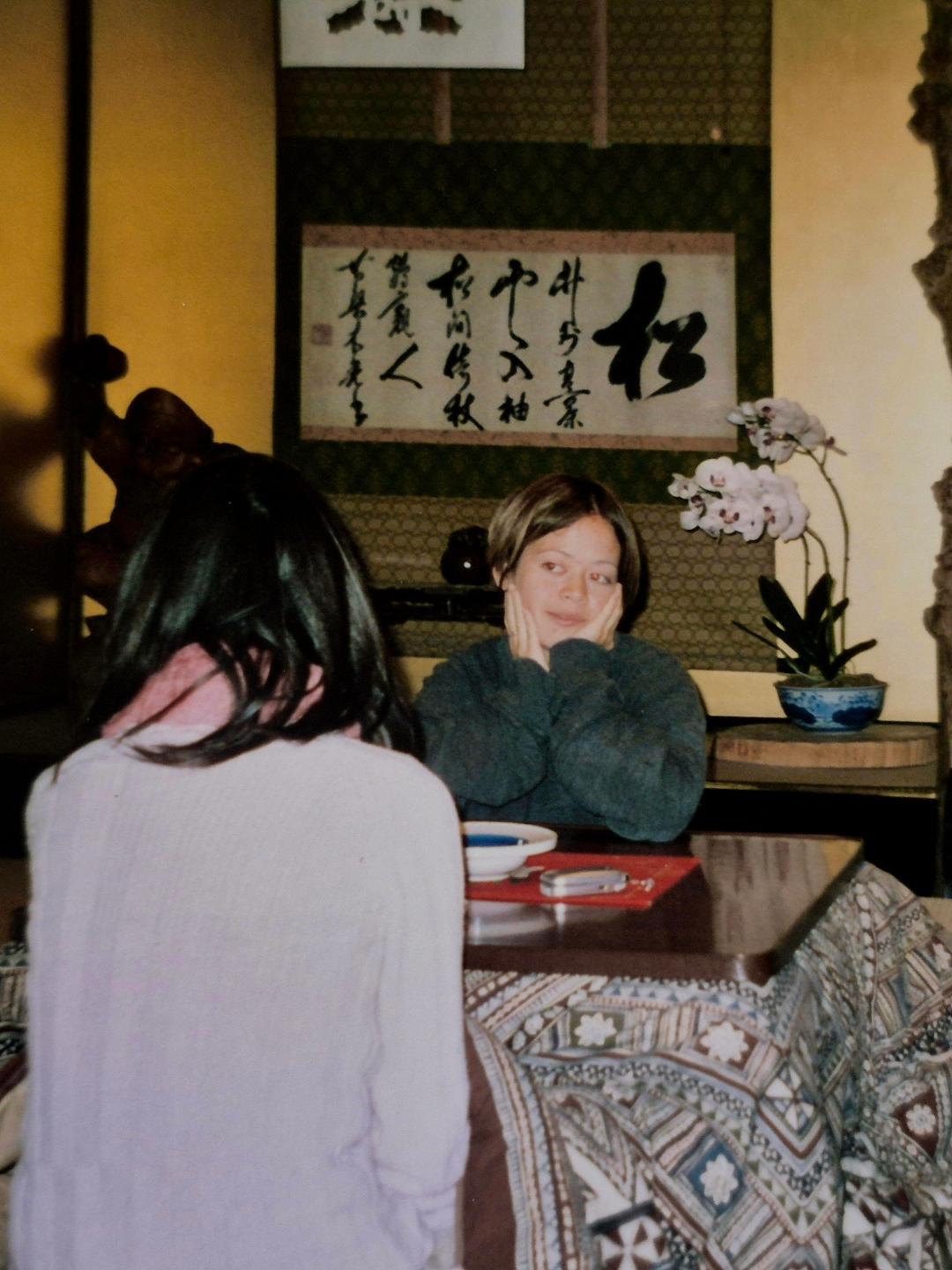
These public gatherings are a far cry indeed from the solitary headspace in which the first fragments of my novel began to emerge over two decades ago. When the characters and locations of A Tiny Speck of Black and then Nothing started to appear to me in flickering snapshots, I was a young English language teacher in my early twenties, living alone in a tiny studio flat in the Japanese city of Matsuyama.
To be clear, this wasn’t an isolated existence in any real sense of the word. My job teaching English in local high schools involved regular interactions with Japanese students and coworkers, and there were several other young expatriate teachers living within the same city. My flat was situated in a residential area. I could frequently hear conversations humming through the walls of neighbouring apartments; noise from the warehouse next door; traffic flowing along the road beyond. Nonetheless, looking back, it’s striking how alone I was there in comparison to how it would have been if I’d arrived at that address today.
In my flat, I had a landline telephone, a television, a radio. But making calls to family and friends in Britain was expensive, and, at least initially, there were few people in Japan that I could ring for a chat. My limited Japanese language meant I could make little sense of the TV. Speech on the radio, with no visuals to help, was even more mystifying. Typically for the era, I had no home internet connection. For part of my time in Matsuyama I did own a mobile phone, which I used for making calls and sending texts; that’s all. It had a colour camera, capable of capturing grainy, pixelated images, and seemed impossibly modern at the time. But it was definitely not a smartphone.
My location and living set-up differed in key ways from that of Anna, the protagonist of A Tiny Speck of Black and then Nothing. Anna lives in Osaka, a much bigger city than Matsuyama. Rather than living alone, she has a flatmate, the enigmatic Charlotte – better known as Loll – with whom Anna develops an intense friendship. On the other hand, the novel’s action takes place in roughly the same period that I lived in Japan, and Anna’s experiences – as a British-Japanese young woman uprooted to a culture she only partially knows – share some similarities with my own.
In A Tiny Speck of Black and then Nothing, Anna’s feelings of isolation contribute to the ease with which she falls so quickly under her glamorous flatmate’s spell. Loll is a nightclub hostess with a mysterious past, someone who – unlike the seemingly more cautious Anna – is reckless and impulsive, at least as far as first appearances go. When, part way through the novel, Loll disappears, Anna’s attempts to discover the fate of her friend are hindered by the many secrets Loll kept, which begin to unfurl as soon as she vanishes from view.
Although this was of course not apparent to me when I began drafting the book, the process of revising it over the past two years has highlighted the extent to which Anna’s efforts to find out what happened to her friend are impeded by the technology available to her at the time. When Loll goes missing, Anna struggles to quickly spread the word; to locate individuals who might be able to help in her search; even to find her way around Osaka in an era of often unreliable paper maps, written in a language she can barely read.
In a much lower-stakes way, I encountered all of these kinds of issues during the two years I spent living in the Japan of the early aughts. But in my case, such limitations provided not painful restrictions but rather important opportunities to begin to hone my craft.
With no access to an endless library of on-line content, no opportunities for endless phone scrolling, I filled the many hours I spent alone in my flat listening to music on CDs, cooking whatever I felt like eating, watching English-language films on video cassettes; mixing cocktails for one and feeling decadent about it; reading voraciously and daydreaming.
What I read, in the main, were translated novels by Japanese authors – mostly contemporary figures. My Japanese mum – who, unlike Anna’s absent mother, was very much a part of my life – had previously introduced me to several Japanese works of the Heian period (Murasaki Shikibu’s The Tale of Genji and Sei Shōnagon’s The Pillow Book, for instance). But, prior to arriving in Japan as a young graduate, I’d known very little about modern Japanese fiction. It’s strange to recall that there was a time when British bookshops were not full of Japanese books catering to all manner of tastes from the milieux of the most gruesome thrillers to that of cosy cafés and wandering cats.
It was thrilling to discover a whole new world of books and to have seemingly endless time to explore them.
As to what I used to daydream about, there were so many things: the future; the past; a lot about love; and my hopes of becoming a better writer. As time went on, though, I found myself dreaming more and more about the hazy, half-formed Osaka setting of my novel-in-embryo. And eventually I would take those dreams and begin, hesitantly, to type sentences on a laptop – one that functioned as little more than an old-fashioned word processor, and which, like so many aspects of my life back then, felt pleasingly disconnected from the rest of the world.
A Tiny Speck of Black and then Nothing will be published as a hardback, ebook and audiobook by Manilla Press on 23 July. UK copies are available for pre-ordering from Blackwell’s, Waterstones, Bookshop.Org, Amazon, or your favourite independent bookshop.
The US e-book, published by Open Road on 4 August, is available for pre-ordering from Barnes & Noble, Bookshop.Org, Amazon and independent bookstores. The audiobook will be available everywhere (including the US and Canada) from 23 July. The US paperback will be released in November and will be available for pre-ordering soon.
Tickets for these upcoming events are available at the following links: Bàrd Debuts at Bàrd Books (Wednesday 22 July), Blackwells, Manchester (Thursday 23 July) and Collected in Durham (Wednesday 29 July).
If you would like to make sure you receive my next monthly essay, and others like it, you can sign up for my newsletter here.