Regular readers of this newsletter will know that my debut novel came out in the UK in late July. As was the case with my previous (nonfiction) titles, launching A Tiny Speck of Black and then Nothing into the world has been both exhilarating and exhausting.
The months leading up to and surrounding a book’s publication are frequently filled with the highs of unanticipated joys and excitements and the lows of frustrations about things over which you, the writer, have very little control.
If you’re not careful such difficulties can become overwhelming, so much so that you end up not fully appreciating the best parts of the experience. In the past, I have sometimes been guilty of falling into that trap. This time round then, I made a conscious decision that, come what may, I was going to thoroughly enjoy every good thing that happened.
An online workshop with Creative Courage’s Rachel Connor at the start of the year was very useful in helping me work out how I would stick to my plan. The exercises set by Rachel made me realise that in order to really absorb publication’s best moments I would need to be fully present for them, as opposed to letting my mind wonder to any adjacent worries simmering away.
By throwing myself into the best parts of the experience, I would ultimately come to recognise that one of the most fulfilling aspects of publishing a book for me is the opportunities it brings for making connections with other literature lovers. Such connections can occur on a large scale, or small. Both can be emotionally rewarding.
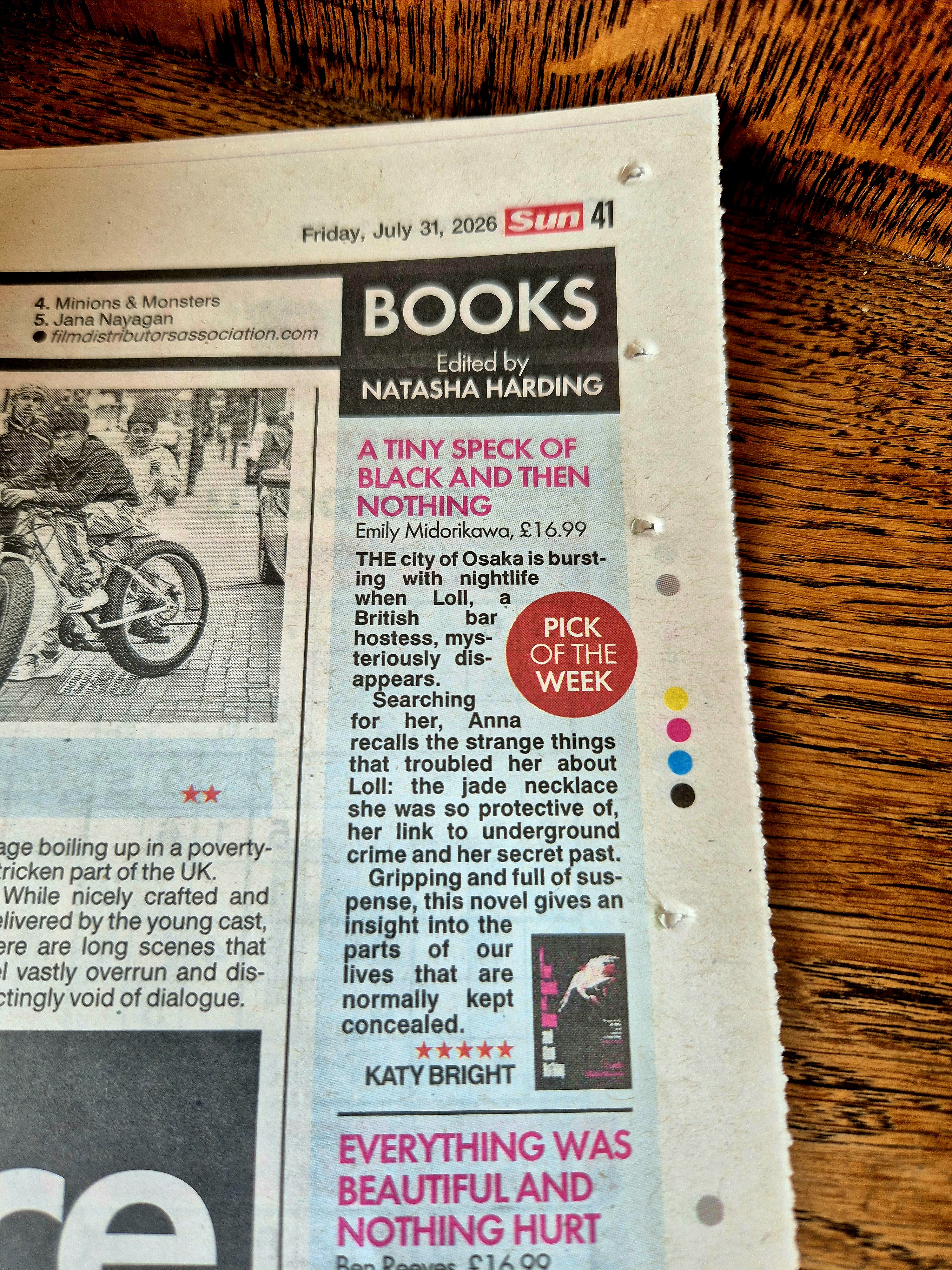
Over the past weeks, for instance, A Tiny Speck of Black and then Nothing has been reviewed in an eclectic mix of British publications. Among these, The Sun newspaper gave it a five-star rating and called it ‘gripping and full of suspense’. The Japan Society Review said the novel ‘eloquently describes that struggle to find one’s way in a land with unfamiliar customs … and the tension that comes with often being on the “outside”’. Elle magazine praised the way the story ‘plunges readers into the nightlife of Osaka’.
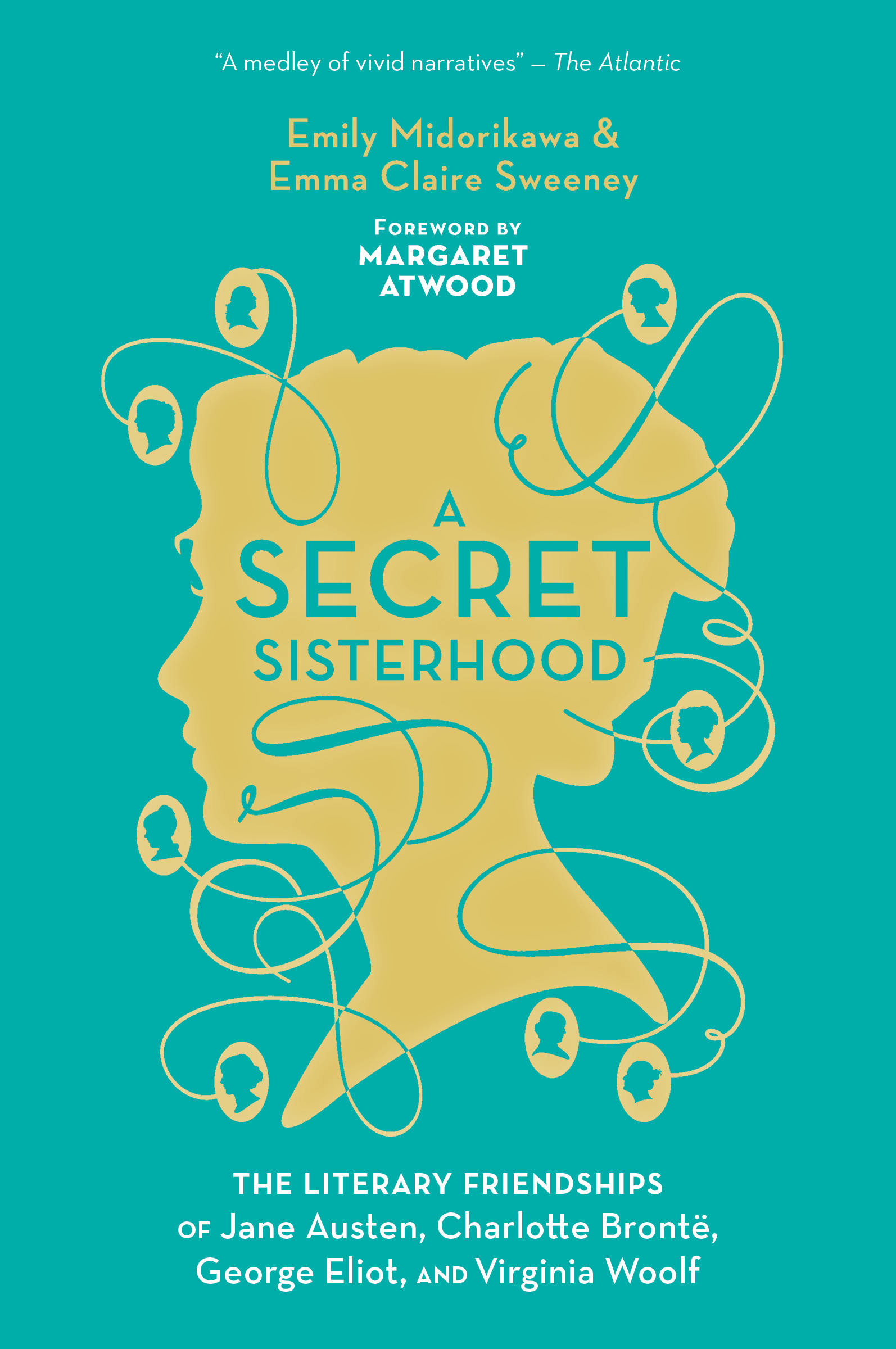
It is wonderful to imagine these articles piquing the interest of faraway readers, who might then get hold of a copy of the novel. I am reminded of the words of Harriet Beecher Stowe, whose literary friendship with George Eliot I explored in my first book A Secret Sisterhood (cowritten with Emma Claire Sweeney). Stowe likened a book, from its writer’s point of view, to ‘a hand stretched forth in the dark passage of life to see if there is another hand to greet it’.
Sometimes, of course, especially these days, an author gets to see a bit more of her audience than Stowe’s quote suggests. I’m very grateful to the readers of A Tiny Speck of Black and then Nothing who have shared their views of the story of Anna and Loll online.
These include Linda Hill of Linda’s Book Bag, who called the book ‘fabulous’, ‘intelligently written, intense and intimate’ and Jo Leevers, bestselling author of, most recently, The Museum of Second Chances, who very generously remarked on her Substack that ‘certain sentences are so elegant I had to stop and read them again’. Up and coming novelist and BAFTA-winning producer Joe Evans, too (whose own novel Den launches next year), made an enthusiastic Instagram reel.
Many others have helped spread the word via social media, or left reader reviews on GoodReads, Amazon, Waterstones and other review sites – which is something that really, really helps authors.
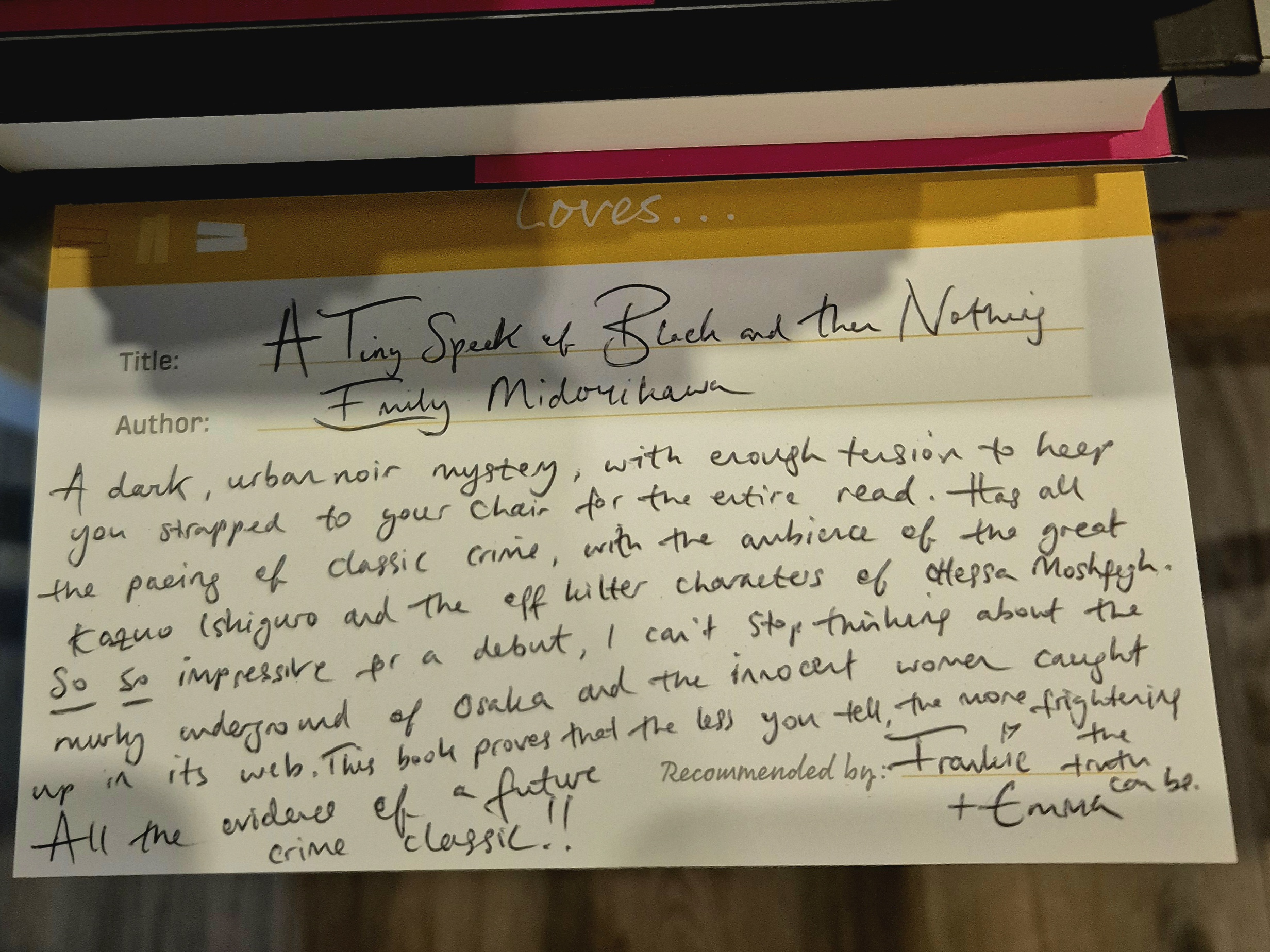
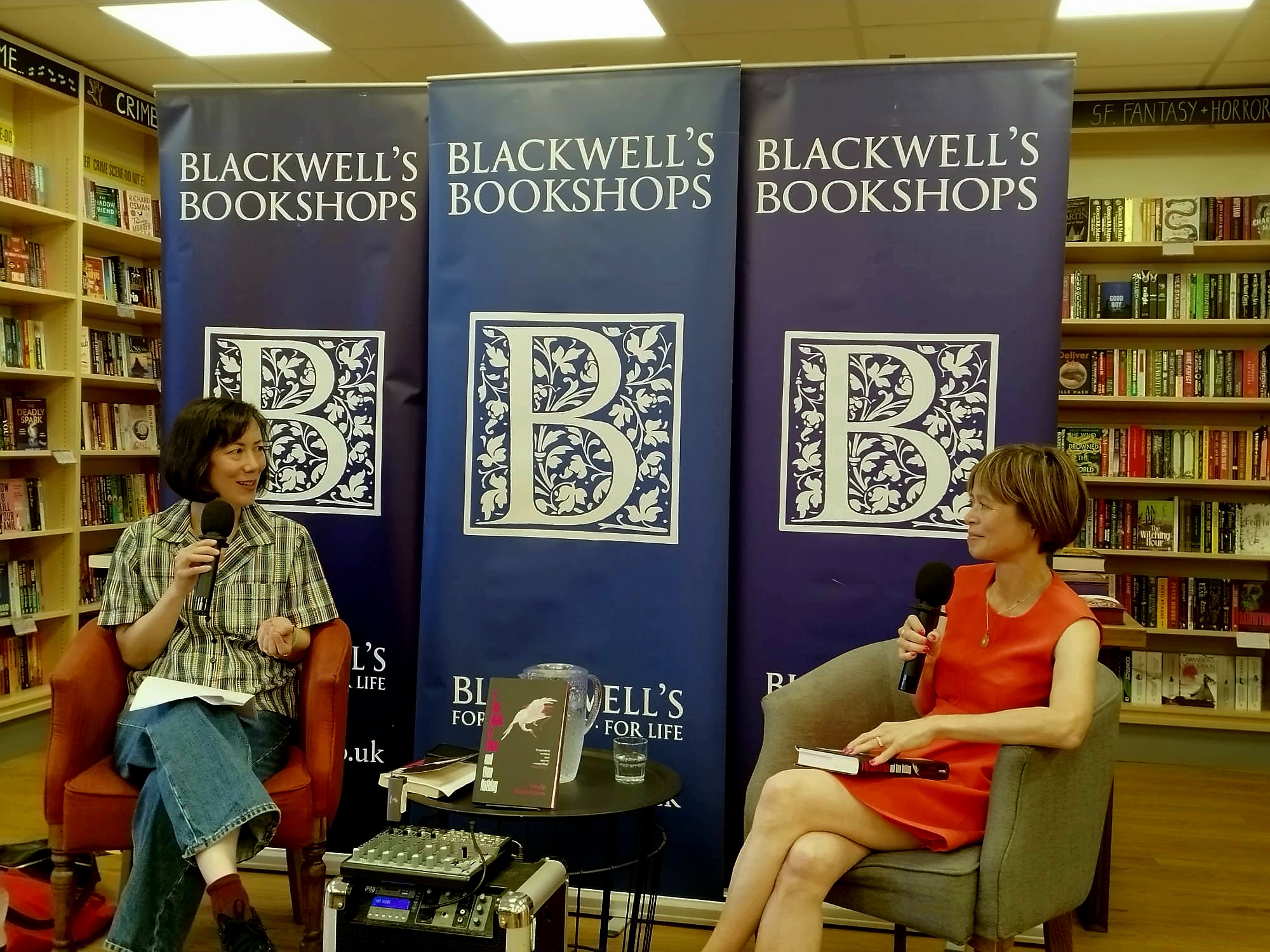
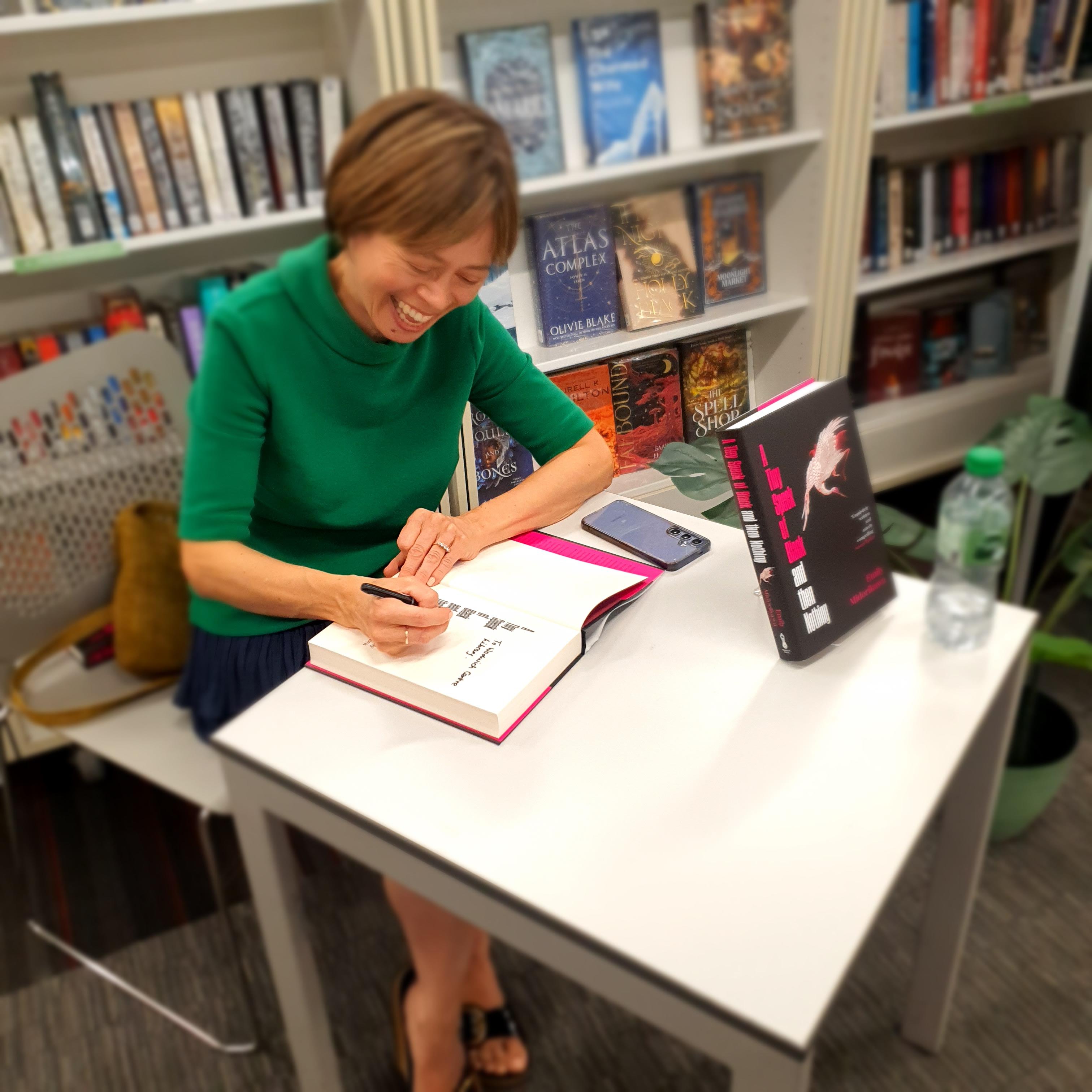
The forging of connections with fellow book lovers doesn’t only happen online. I’m so happy to have met many readers in person at the various bookshops and libraries I visited on my UK tour – occasions that, perhaps partly due to the promise I’d made to myself at the start of the year, were an absolute joy each time.
Having begun A Tiny Speck of Black and then Nothing close to a quarter of a century ago – at a time when its early-2000s setting was contemporary! – it was astonishing to finally be able to discuss the novel in front of such supportive crowds and in the more intimate settings of the book signings that followed.
But publishing a book isn’t all about building new connections. It’s as much about strengthening links that already exist with organisations and individuals an author has enjoyed working with, or writing for, before.
Two of the authors who interviewed me at my events are writers I admire and also close personal friends: my Secret Sisterhood coauthor Emma Claire Sweeney (at Burley Fisher in London) and Susan Barker, author of Old Soul (at Blackwell’s, Manchester). I was delighted to mark the publication of A Tiny Speck of Black and then Nothing by contributing a guest essay to the website of another writer friend, Sarah Emsley, author of The Austens. I was also recently given the opportunity to return as a guest to one of my favourite podcasts, Lost Ladies of Lit – due to air in September. It was a thrill to chat with Kim Askew and Amy Helmes about the underrated brilliance of Celia Fremlin, whose 1950s domestic noir novel The Hours Before Dawn has been an important literary influence. I have a few more collaborations in the pipeline too, which I’ll look forward to sharing in a future newsletter.
Every bit as important as such public-facing examples, however, are the quieter forms of connection. The old school friend with whom you had long lost touch who messages to say they have read your book. The reader of your previous nonfiction titles who decides to give your novel a go. And just the fact that, though you may never know anything about them, somewhere out there in the darkness – as imagined by Stowe– are people who have read your words and have formed a connection with you.
A Tiny Speck of Black and then Nothing is published by Manilla Press in the UK and is available from Blackwell’s, Waterstones, Bookshop.Org, Amazon or your favourite independent bookshop.
The US paperback will be published by Open Road on 10 November and is available for pre-ordering from Barnes & Noble, Bookshop.Org, Amazon and independent bookstores.
The novel is also available as an ebook and as an audiobook, narrated by Jacqui Bardelang.
A Tiny Speck of Black and then Nothing was recently featured in The Sun (5* review), Elle, My Weekly, the Japan Society Review, Linda’s Book Bag, Jo’s Substack and the Debut Digest.
I wrote a guest post for Sarah Emsley’s website about what this debut novelist learned from writing biography.
If you would like to make sure you receive my next monthly essay, and others like it, you can sign up for my newsletter here.