On Reading, in All its Forms

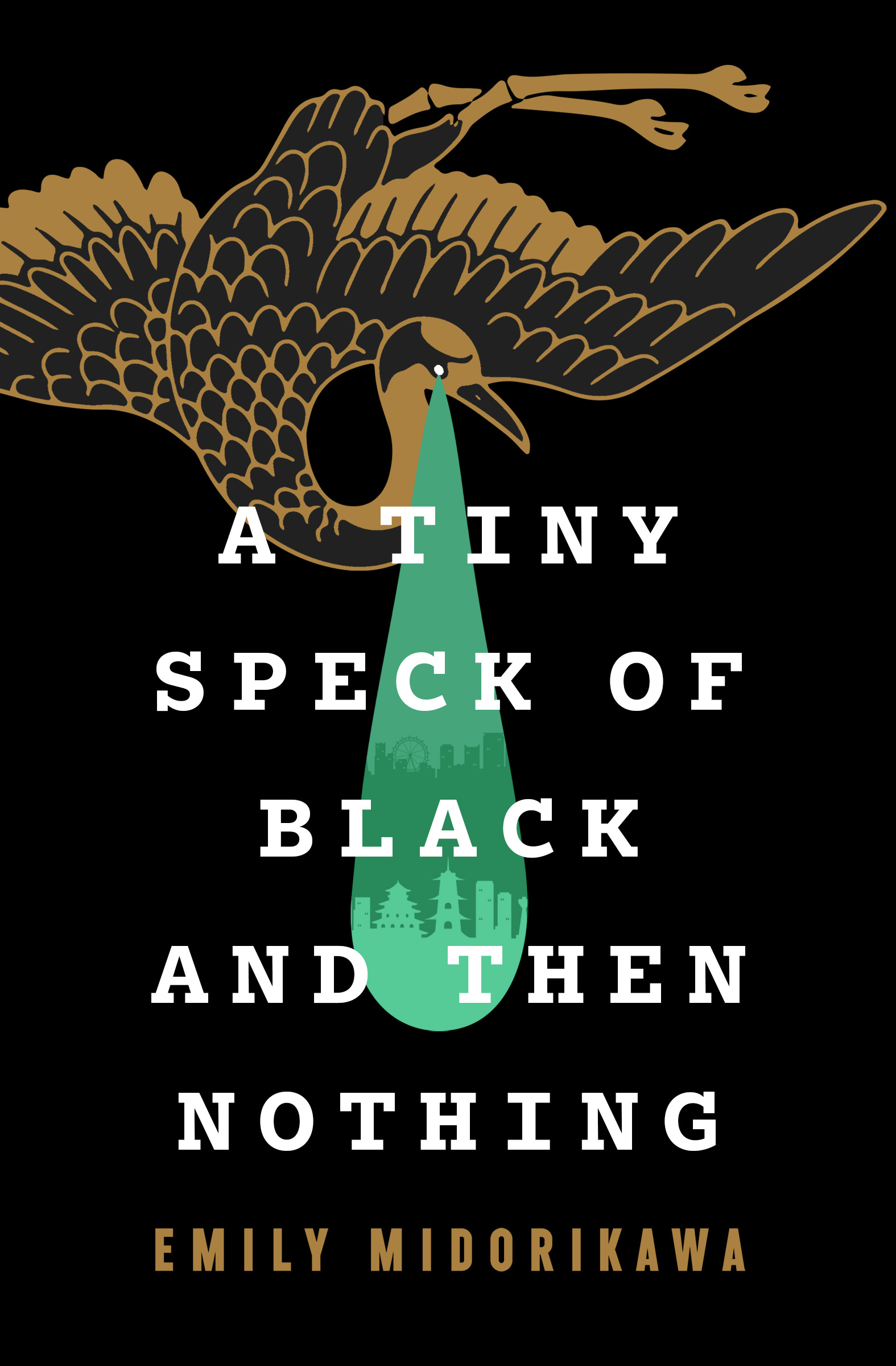
Cover of the US edition

Through the window of my study in Washington DC, the once green leaves of the trees outside are turning red and gold. In the neighbouring streets – and to the excitement of my small children – cascades of pumpkins descend along porch steps, cloth ghosts and skeletons sway on strings. There are scattered bones, witches’ hats and synthetic spider webs.

For me, time has flown since this summer, when I was back to the UK for the publication of A Tiny Speck of Black and then Nothing. I find it hard to believe that Halloween is almost here, and that publication day for the North American print edition is just around the corner.

If you live in Canada or the USA, the print edition of A Tiny Speck of Black and then Nothing will be out on 10 November, and is available for pre-ordering now.
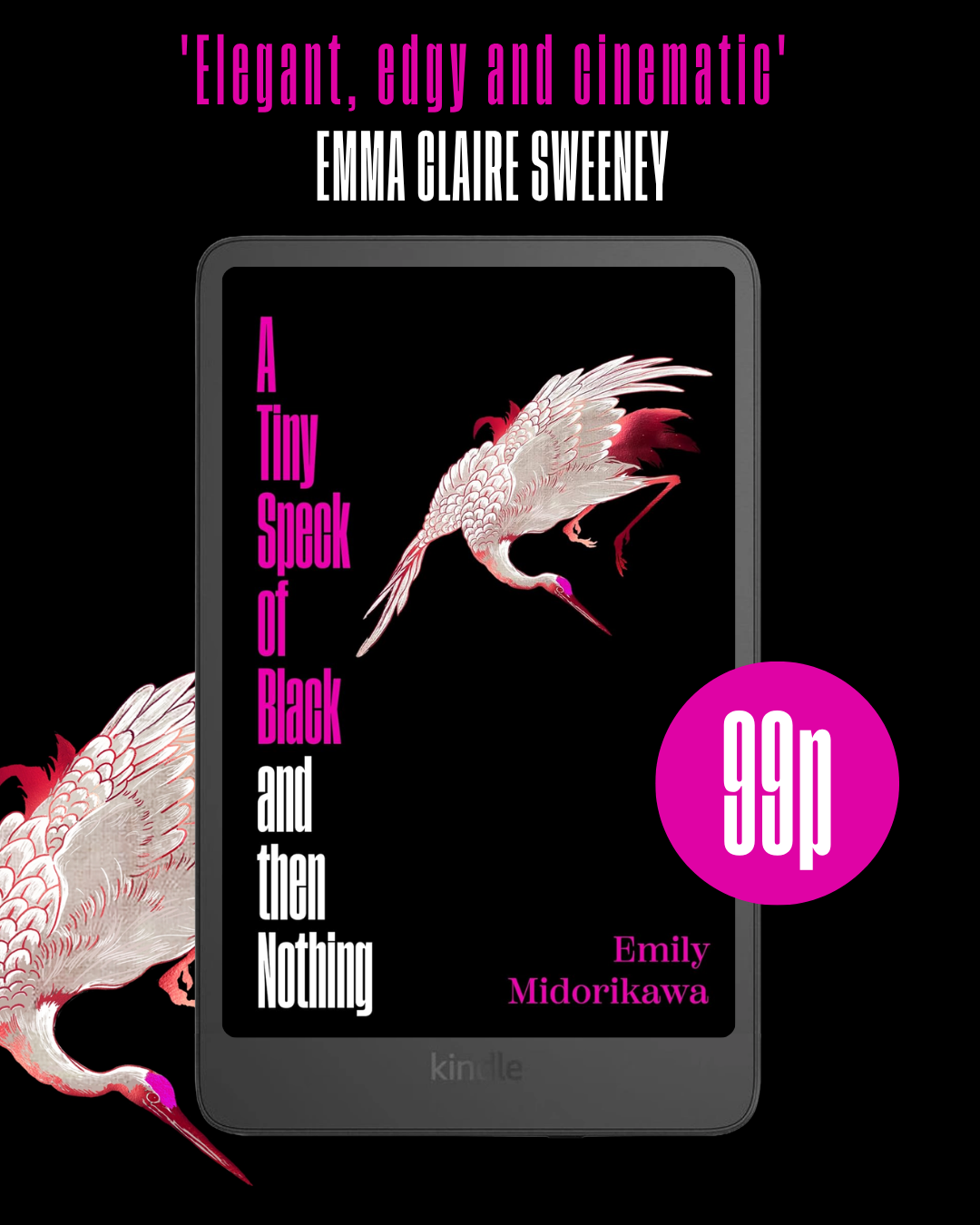
UK Amazon offer, valid until 31 October 2026

For readers based in the UK, I also want to mention that Amazon is running a deal for Kindle, which allows you to grab a copy for the bargain price of 99p! But the offer lasts for only three more days (from the time this newsletter goes live). If you’d like to take advantage of it, you have until the end of 31 October.

The novel is already available in ebook and audio versions in the US and Canada, as well as the UK and beyond. But knowing that it will soon be out over here in print too, makes me very happy. As an author, I’m aware that everyone has different reading preferences – often dictated as much by life circumstances as personal choice – and so it’s important to me that my books can be experienced in as many different formats as possible.

In terms of my own likes, my favourite way of reading remains the print book. I love curling up in a quiet corner, ideally with a cup of tea, and letting myself become completely absorbed. I like the feel of the paper in my hands, and the creak and rustle of the pages. If I’m reading an old book, its slightly musty scent can be comforting.

Having said that, if I only ever read under those idyllic conditions I would not get much reading done.

The fact is that, having a five and seven-year-old around the house, sitting down quietly with a book is often not an option. There are the hours when my son and daughter are at school, but those tend to be taken up with writing and related work, plus the many other tasks that are difficult to accomplish with my kids around. Although I’ll find a bit of time to read a physical book in the evening when they are in bed, during the day it’s generally more convenient to have an audiobook playing while I’m running errands or doing housework.

I feel thankful for the technology that lets me keep up with books in this way even when I’m doing other things. Without it, my days would be so much emptier. This way, it remains an activity woven into my life.

As it happens, the subject of reading as a habit has been on my mind a lot this month. As I mentioned in my last newsletter, I recently sat down with Rebekah Lattin-Rawstrone of the Hypothetical Bookshelf podcast to talk about five books that have influenced me as a reader and writer. Listening back to the interview, which aired in early October, it was interesting to notice some of the patterns in my reading choices over the years, quite a few of which I had not been particularly aware until my discussion with Rebekah.

If you’d like to hear me enthusing about, among other things, Haruki Murakami’s nonfiction, the evergreen humour of Barbara Pym’s novels and the Victorian sensation fiction of Wilkie Collins, you can listen to the recording here.

I look forward to a future time when I can introduce my children, both keen readers, to some of these titles; and also to the day – hopefully not too far off – when we can all regularly sit down together, immersed in our own books but in the company of each other.

A Tiny Speck of Black and then Nothing is published by Manilla Press in the UK and is available from Blackwell’s, Waterstones, Bookshop.Org, Amazon or your favourite independent bookshop.

The US paperback will be published by Open Road on 10 November and is available for pre-ordering from Barnes & Noble, Bookshop.Org, Amazon and independent bookstores.

The novel is also available as an ebook and as an audiobook, narrated by Jacqui Bardelang.

I recently appeared on episode 9 of The Hypothetical Bookshelf.

If you would like to make sure you receive my next monthly essay, and others like it, you can sign up for my newsletter here.
A Chance Discovery that Shaped Me as a Writer (and quite a lot about podcasts)

I’m delighted to have been asked to judge the 2026 Book Edit Writers’ Prize, which is open for entries from British/UK-based writers until 16 October. The prize is aimed at unpublished novelists from backgrounds and communities currently underrepresented in UK publishing. The full eligibility criteria and details of how to enter can be found here. I also recently answered some questions from prize founder Emily Pedder about my career to date and what I’ll be looking for in this year’s submissions

You can read the whole interview here, but right now I want to reflect on my response to just one question. When Emily asked me about my most important advice for emerging writers, I didn’t have to hesitate. ‘Read,’ I said. ‘Read for enjoyment, but also read with a writer’s eye.’ There really is so much a writer can learn by studying the work of other authors – although it’s the kind of learning that may go unnoticed at first, especially when one is in the thrall of a book.

Recently, I had the enjoyable opportunity to reflect on a book that’s made an important mark on both my reading and writing lives. Being a great fan of the Lost Ladies of Lit podcast, it was a thrill to open the new season with hosts Kim Askew and Amy Helmes for a discussion about The Hours Before Dawn by Celia Fremlin.

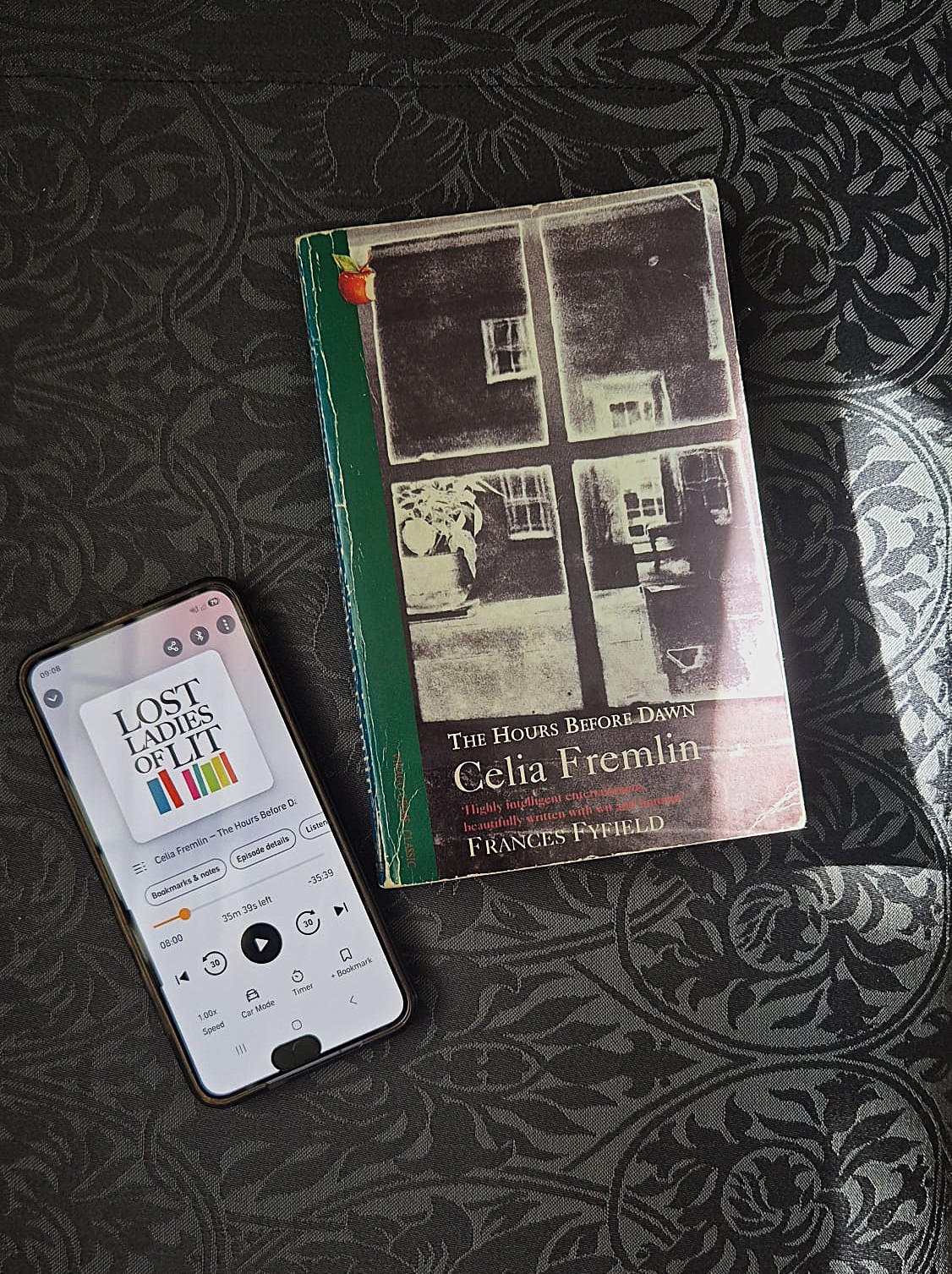
Happy listening alongside my Virago edition of Fremlin’s novel

As I shared with Amy and Kim, I have a very strong memory of discovering my old copy of this 1950s suspense novel – since reissued by Faber – in a second-hand bookshop in East London. What first caught my attention was the arresting title, staring out from the spine. When I drew down the book from the shelf and made a start on the first few pages, I was immediately gripped. The Hours Before Dawn is the story of Louise, a sleep-deprived young mother of three small children, whose already exhausting life is put under even greater pressure when a mysterious lodger comes to live at the family home.

If you haven’t read this fine example of early domestic noir, I urge you to do so – not just for its page-turning plot but also how skilfully its author brings the suburban London of the 1950s to life. I have read Fremlin’s book several times over the years. With each new reading I have taken away different things. However, it was perhaps only when I returned to the book to prepare for the Lost Ladies of Lit episode that I fully appreciated the extent to which Fremlin’s novel had influenced my own approach to writing.

At first glance, the early 2000s Japanese setting of my fiction debut, A Tiny Speck of Black and then Nothing, is very different from the milieu of 1950s London that Fremlin evokes. On the other hand, much of the action of both books revolves around a very particular living space. In my novel it’s Apartment 603 – where Anna and Loll, the main characters, live – situated within a tower block in the bustling heart of the city. In The Hours Before Dawn it’s a terraced house on a quiet residential street. What both locations share is a set of very fixed boundaries, which can at times make them feel as if they are cut off from the rest of the world.

As I reread Fremlin’s novel, what really hit me this time is just how much I’d learned from her technical expertise: how, with the use of strong pacing and carefully controlled revelation of detail, a writer can use domestic settings such as these to enhance atmospheres of strangeness and growing tension.

As it happens, my Lost Ladies of Lit appearance hasn’t been my only chance of late to reflect on authors whose work has influenced me. A couple of weeks ago, I sat down for a chat with Rebekah Lattin-Rawstrone, host of The Hypothetical Bookshelf (‘a Desert Island Discs for books’) for a chat about five books that have shaped me as a reader and writer. The episode will air soon, so I should be able to talk more about it in a future newsletter.

In a final bit of podcast-related news, this month I was pleasantly surprised to hear Amelia Kyazze, author of, most recently, The Cinema on Jósef Boulevard, recommend A Tiny Speck of Black and then Nothing during an episode of Write and Wrong. I was also very happy to spot my novel elegantly photographed on the tea table of popular book blogger, Miranda Mills, whose new release, The Cosy Commonplace Book, is out now in the UK and should shortly be available in the US too. And I was so encouraged by the praise of Instagram reviewer Cornflower Books, who called my novel ‘ thriller-like, cinematic, meticulously observed’ and Ann Kennedy Smith, whose Cambridge Ladies’ Dining Society Substack I love, and who said it was a book she ‘genuinely couldn’t put down’.

Since unputdownable is definitely the way I would describe Fremlin’s The Hours Before Dawn, it was lovely to hear my own book described in similar terms. In addition to the quotes I mention above, I continue to be very moved by the messages and reader reviews I’ve received (on Amazon, GoodReads, Waterstones and elsewhere) from people who have enjoyed my novel. It has been truly wonderful to introduce a few more people to Fremlin’s work this month. In turn, I am enormously appreciative that, thanks to the kind words of my own readers, more people are discovering A Tiny Speck of Black and then Nothing too.

A Tiny Speck of Black and then Nothing is published by Manilla Press in the UK and is available from Blackwell’s, Waterstones, Bookshop.Org, Amazon or your favourite independent bookshop.

The US paperback will be published by Open Road on 10 November and is available for pre-ordering from Barnes & Noble, Bookshop.Org, Amazon and independent bookstores.

The novel is also available as an ebook and as an audiobook, narrated by Jacqui Bardelang.

I was recently announced as the judge of the 2026 Book Edit Writers’ Prize.

I appear on episode 152 of Lost Ladies of Lit ‘Celia Fremlin –The Hours Before Dawn with Emily Midorikawa’

If you would like to make sure you receive my next monthly essay, and others like it, you can sign up for my newsletter here.