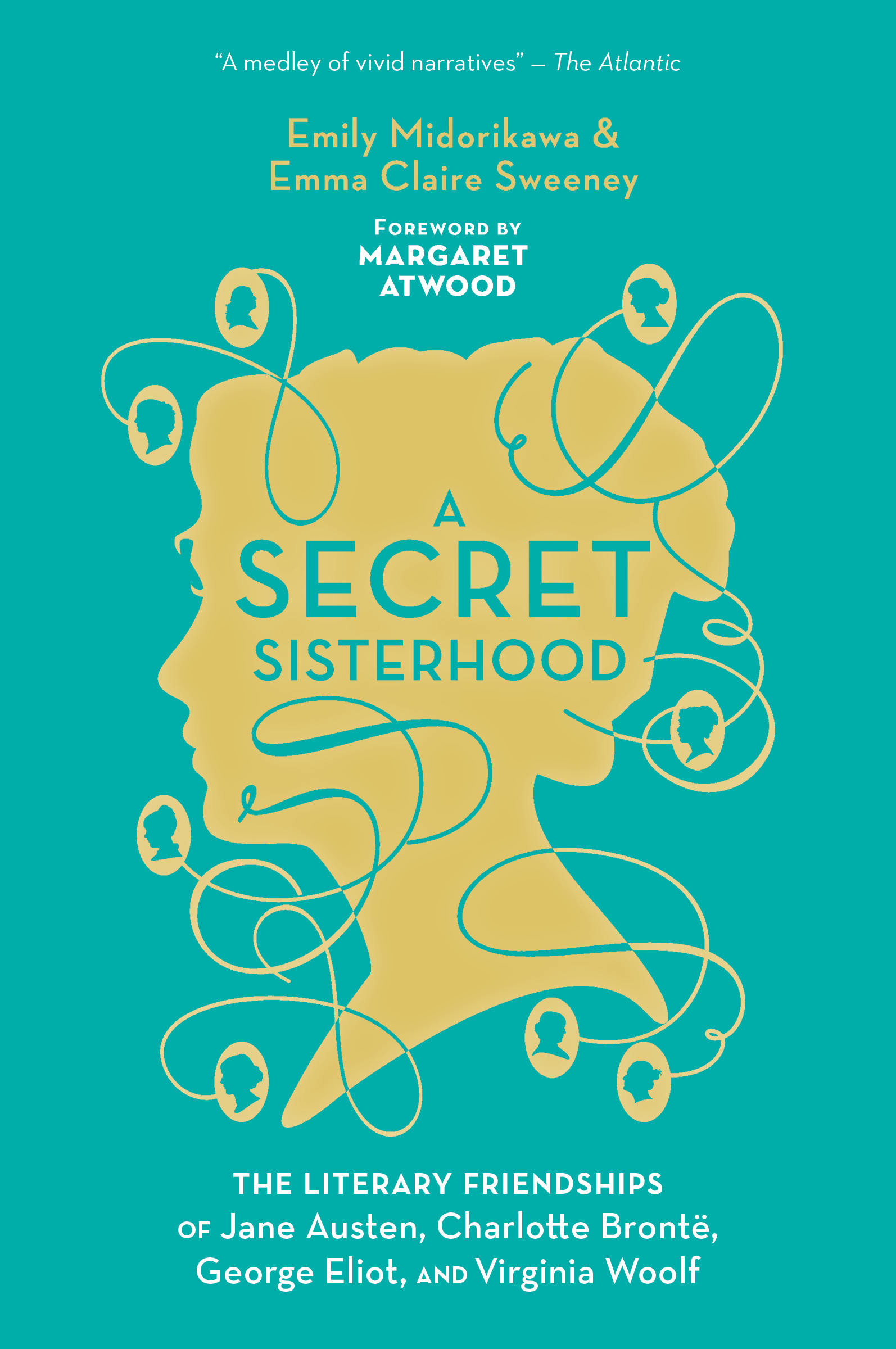
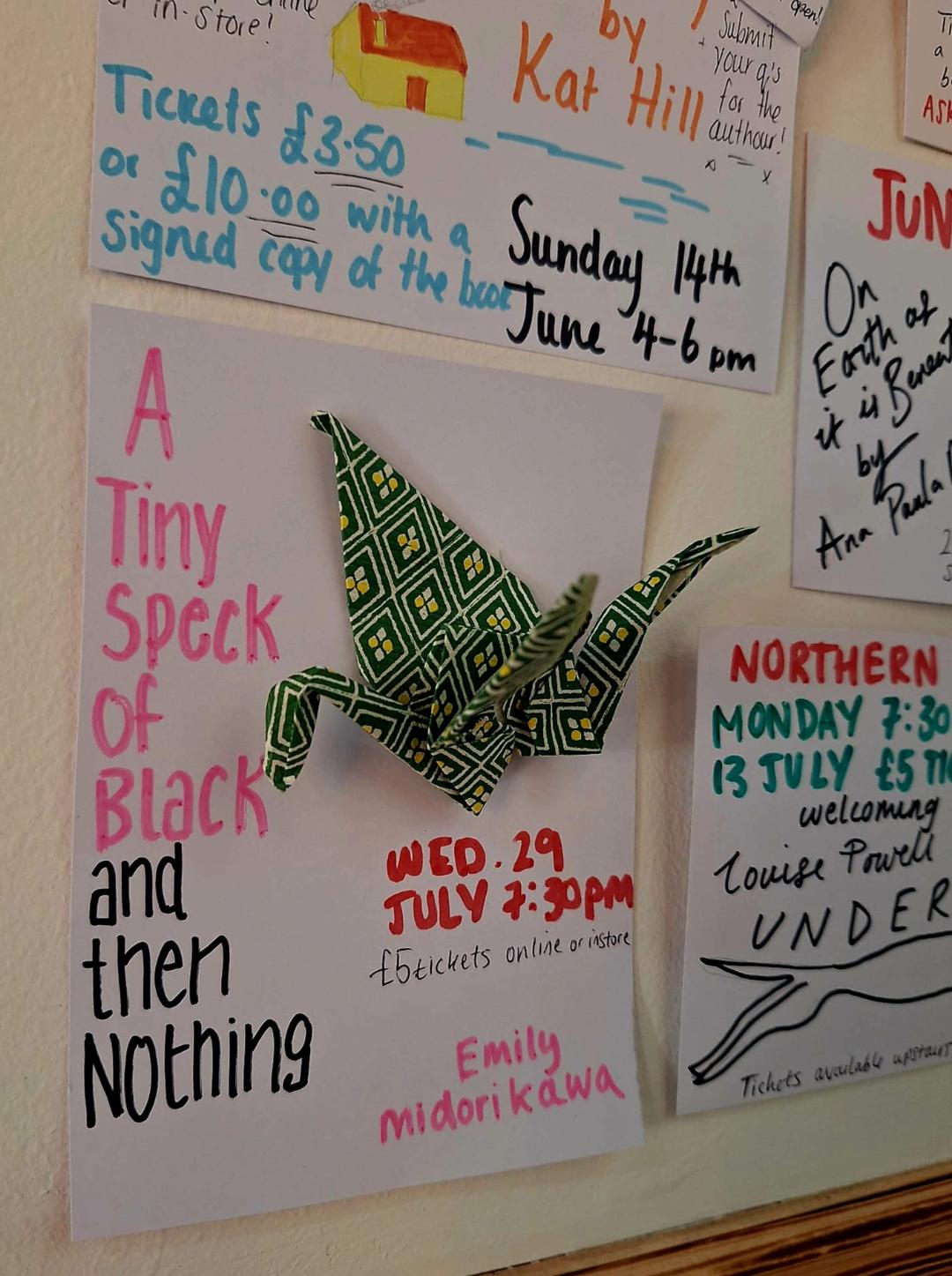
Last month, I mentioned that I’ll be marking UK publication day for my debut novel A Tiny Speck of Black and then Nothing with an event at Blackwell’s, Manchester on Thursday 23 July. I’m now delighted to be able to let you know that I’ll also be giving a talk at the fantastic independent bookshop Collected in Durham on Wednesday 29 July, so if you can’t make it to Manchester (or even if you can) I’d love to see you in Durham.
I’ll be adding more bookings to my events page soon and will continue to share news about them through this newsletter and on Instagram, Threads and Bluesky.
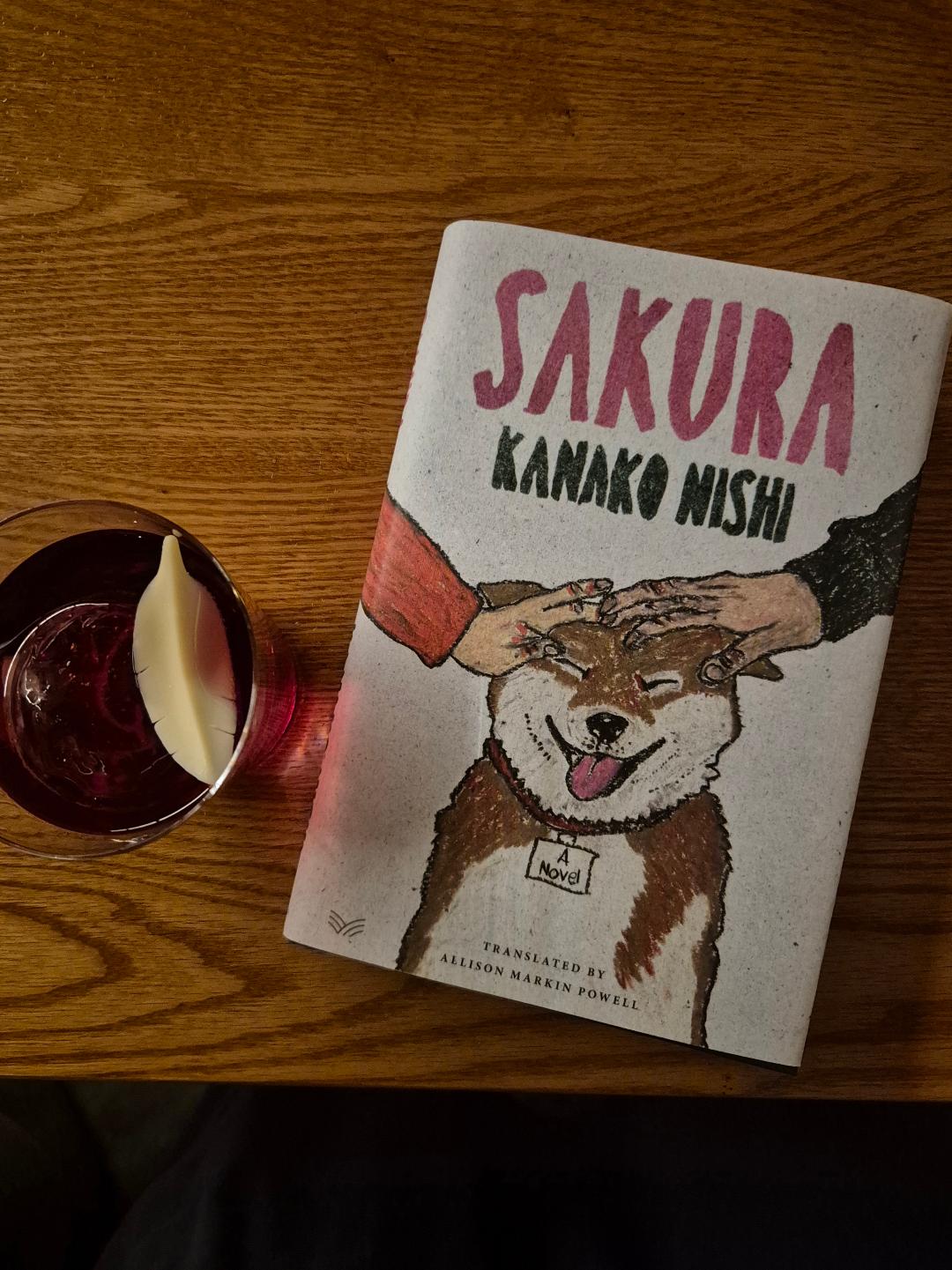
Speaking of bookshop events, here, on the other side of the Atlantic, I recently attended a fascinating talk at Lost City Books in Washington DC. Kanako Nishi, author of the novel Sakura, was appearing on a panel with her literary translator, Allison Markin Powell.
In Sakura, Nishi paints a loving picture of a close-knit Japanese working-class family that suddenly finds itself thrown into a state of shocking emotional turmoil. It was originally published in Japan in 2005, but only came out in English translation this year. Although Nishi’s publishing journey doesn’t exactly mirror mine, I couldn’t help noticing that there was a marked similarity between our two positions. As I mentioned in my April newsletter, there is a gap of over twenty years between the time when I began writing A Tiny Speck of Black and then Nothing in the early 2000s and its publication date this July.
During the bookshop Q&A, I asked Nishi what it was like to be on tour promoting a book that she wrote so many years earlier. In the engagingly relaxed speaking style evident throughout her talk, she replied that it was a bit like having someone read your personal diary from that time – which was maybe not the most reassuring answer for me, but certainly made us all laugh!
In the weeks since that book event, I’ve found myself thinking a lot about Nishi’s words. Although I can’t yet summarise the experience of discussing my novel in public, I can say something about how strange it has sometimes felt to be working in private on a long abandoned manuscript that I began when I was young.
When, to my utter astonishment, an editor who’d read A Tiny Speck of Black and then Nothing some years ago suddenly got back in touch with my literary agent and offered to take it on, I realised that I’d better quickly reread the book to see exactly what was there.
Given that I hadn’t looked at its pages in almost a decade, it was with some trepidation that I opened up the document on my computer.
I worried that the story wouldn’t hold together; that sentences originally penned when I was a less experienced writer might amount to something that was, well … just, quite bad; and that the book’s once contemporary, early 2000s setting might come across as dated.
Once I began reading, however, I felt pleasantly surprised. Despite seeing at once that plenty of work was needed – and the manuscript would, indeed, undergo at least five more significant redrafts – I was relieved to find that the essence of the story could remain as it was. As for the writing, I’d be lying if I denied that there were lines that made me cringe, instances of clunky phrases, metaphors that seemed muddled. But thankfully, my prior experience of publishing two other (nonfiction) books had taught me that problems such as these were fixable.
What then of the question of how much the novel had dated?
Beginning to read it again in early 2024, with a publishing deal on the table at last, I found that, yes, in some ways, the two-decade gap in time seemed vast. It was immediately apparent in everything from the colloquial language of the book’s characters, to the technology they used, to the extent to which their day-to-day lives were lived largely offline.
But as I made my way through the manuscript I realised that, in setting my novel in the early aughts I had inadvertently captured something of an era that was on the cusp of huge social change. As my characters moved through the book’s Osaka cityscape – taking blurry images on their first camera phones, listening to music on CDs, making decisions about where to go out at night based on enticements promised by paper flyers – they had no idea how soon the prevalence of social media, smartphones and the internet in their pockets would completely alter the way they lived.
Rather than trying to work around these things, to try to make A Tiny Speck of Black and then Nothing seem more up-to-date, I decided that what I should do instead was to lean into these aspects of my novel. And as it would turn out, revisiting this recent-yet-distant past would become one of the most enjoyable aspects of redrafting. While perhaps not exactly like reopening the pages of an old diary, the process brought back enough memories of the early 2000s that, sitting at my desk in the months leading up to publication, it would often feel to me – and thrillingly so – as if I were living in two eras at once.
A Tiny Speck of Black and then Nothing will be published by Manilla Press on 23 July 2026 and is available for pre-ordering now.
Tickets for my Blackwells, Manchester event (where I’ll be in conversation with the author of Old Soul, Susan Barker) are available here.
Tickets for my Collected event in Durham are available here.
If you would like to make sure you receive my next monthly essay, and others like it, you can sign up for my newsletter here.